Saturday, January 7, 2017

Journaling Genesis #2

What can I learn about God from reading Genesis 2 and 3?

  • God rests from his work which he proclaimed good.
  • God blesses the seventh day and declares it holy.
  • God created man and woman (not to mention everything else) and placed them in a beautiful, amazing garden. 
  • God provided for them--"every tree pleasing in appearance" and "good for food." They lacked nothing they needed. God met their every need.
  • Planted in the garden, God gave them the tree of life and the tree of the knowledge of good and evil.
  • God gave the man work to do. Given the job to work in the garden and watch over it. Both working and watching over things are things God did too. 
  • God institutes marriage. God made woman for man. Both men and women were created by God. 
  • God speaks and reveals himself. Here he gave commands to Adam about the tree.
  • God calls out to us (Genesis 3:9) and seeks us out for fellowship--relationship.
  • God judges sin. (Genesis 3:14-25) And sin has consequences. The consequence here was leaving the garden forever. There were other consequences too.
  • God provided appropriate clothing or COVERING for them to cover their shame. Skins requiring a blood (animal) sacrifice. God still provides a covering for our shame--the righteousness of Christ.
  • God gave a promise. The first of many. God gave hope. They didn't deserve grace--but it was given all the same.
  • God was good and gracious. He showed this by how he continued to treat them after the fall. He disciplined, yes, but showed mercy and righteous judgement. 


What can I learn about myself by reading Genesis 2 and 3?

  • I should be on the look out for sin and guard against it. Sin is deceitful. It promises much but delivers only death.
  • Passing the blame and making excuses may come naturally, but neither is morally right. I am just as guilty as Adam and Even when it comes to thi.
  • I should never try to make "fig-leaf" clothes to cover my sin, my guilt, my shame.
  • I cannot make myself acceptable to God. I cannot work my way to a righteous standing before God. 
  • I should cling to Jesus Christ who clothes me with His righteousness.
  • I should look forward to the day when sin is no more and I can be free from the curse of original sin. Heaven will be wonderful!


© Becky Laney of Operation Actually Read Bible

Friday, January 6, 2017

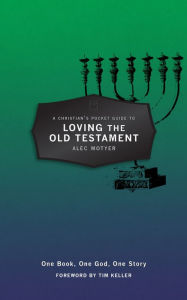
Book Review: Loving the Old Testament

A Christian's Pocket Guide to Loving the Old Testament. Alec Motyer. 2015/2016. Christian Focus. 144 pages. [Source: Borrowed]

First sentence: The Bible is God's gift to us as a domestic and personal 'means of grace.'

Premise/plot: Do you love the Old Testament? Do you want to love the Old Testament? Do you wonder what makes the Old Testament so important--so essential--to the faith? Or perhaps you wonder why there is an Old Testament at all. Perhaps you think all we need--all we really need--is the New Testament. Alec Motyer's little 'pocket guide' to loving the Old Testament is a lovely little book.

My thoughts: I love the Old Testament. I do. I love the Bible cover-to-cover. I read the Bible cover-to-cover. Motyer didn't have to persuade me to give the Old Testament a chance. But. I think this little book serves as a lovely little reminder to the Christian church--to Christians in general--that the Old Testament IS very much worth reading. In fact, Motyer argues that we could not know Jesus properly without the Old Testament. (19)

Have you ever given the Old Testament that much weight in your theology?

Favorite quotes:
Never be afraid to exalt the sovereignty of God to the nth degree and beyond. It's the pillow on which we can lay our heads. We are only safe in this world because it's His world. (37)
Salvation was (not simply made possible but) actually accomplished on Passover night. Before Passover they could not leave Egypt; after Passover they could not stay. Before Passover they were a slave people, helpless and hopeless, under an edict of extermination; at Passover they became a pilgrim people, dressed for the road, a people liberated to walk with God. (69)
© Becky Laney of Operation Actually Read Bible

Thursday, January 5, 2017

My Year with Matthew Henry

This year I will be reading Matthew Henry's Concise Bible Commentary alongside the American Standard Version (1901). I will share quotes a few times a month.

From Genesis 1-3:
In heaven there is perfect light, and no darkness at all; in hell, utter darkness, and no gleam of light. The day and the night are the Lord’s; let us use both to his honor, by working for him every day, and resting in him every night, meditating in his law both day and night.
We are set as lights in this world to serve God; but do we in like manner answer the end of our creation? We do not: our light does not shine before God, as his lights shine before us. We burn our Master’s candles, but do not mind our Master’s work.
Jehovah is that name of God, which denotes that he alone has his being of himself, and that he gives being to all creatures and things.
No delights can be satisfying to the soul, but those which God himself has provided and appointed for it.
Only he that made us can make us happy; he that is the Former of our bodies, and the Father of our spirits, and none but he, can fully provide for the happiness of both.
The Scriptures always speak of man as of this sinful character, and in this miserable state; and these things are true of men in all ages, and of all nations.
There are many temptations to which being alone gives great advantage; but the communion of saints tends very much to their strength and safety.
They that would not eat the forbidden fruit, must not come near the forbidden tree.
It is the craft of Satan to speak of the Divine law as uncertain or unreasonable, and so to draw people to sin; it is our wisdom to keep up a firm belief of God’s command, and a high respect for it.
Satan teaches men first to doubt, and then to deny.
Let us, therefore, always think well of God as the best good, and think ill of sin as the worst evil: thus let us resist the devil, and he will flee from us.
See here what dishonor and trouble sin is; it makes mischief wherever it gets in, and destroys all comfort. Sooner or later it will bring shame; either the shame of true repentance, which ends in glory, or that shame and everlasting contempt, to which the wicked shall rise at the great day. See here what is commonly the folly of those that have sinned.
Though he is the tempter, we are the sinners. Let it not lessen our sorrow for sin, that we were beguiled into it; but let it increase our self-indignation, that we should suffer ourselves to be deceived by a known cheat, and a sworn enemy, who would destroy our souls.
This gracious revelation of a Savior came unasked, and unlooked for. Without a revelation of mercy, giving some hope of forgiveness, the convinced sinner would sink into despair, and be hardened. By faith in this promise, our first parents, and the patriarchs before the flood, were justified and saved.
As the gospel gains ground, Satan falls.
Sin brought death into the world: if Adam had not sinned, he had not died.
He gave way to temptation, but the Savior withstood it. And how admirably the satisfaction of our Lord Jesus, by his death and sufferings, answered the sentence passed on our first parents! Did travailing pains come with sin? We read of the travail of Christ’s soul, Isaiah 53:11; and the pains of death he was held by, are so called, Acts 2:24. Did subjection came in with sin? Christ was made under the law, Galatians 4:4. Did the curse come in with sin? Christ was made a curse for us, he died a cursed death, Galatians 3:13. Did thorns come in with sin? He was crowned with thorns for us. Did sweat come in with sin? He sweat for us, as it had been great drops of blood. Did sorrow come in with sin? He was a man of sorrows; his soul was, in his agony, exceeding sorrowful. Did death come in with sin? He became obedient unto death. Thus is the plaster as wide as the wound. Blessed be God for his Son our Lord Jesus Christ.
Adam and Eve made for themselves aprons of fig-leaves, a covering too narrow for them to wrap themselves in, Isaiah 28:20. Such are all the rags of our own righteousness. But God made them coats of skin, large, strong, durable, and fit for them: such is the righteousness of Christ; therefore put ye on the Lord Jesus Christ.

© Becky Laney of Operation Actually Read Bible

Wednesday, January 4, 2017

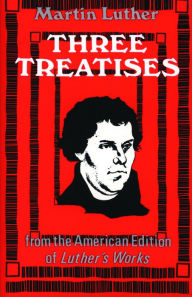
Book Review: Three Treatises

Three Treatises. Martin Luther. 1970. Fortress Press. 316 pages. [Source: Gift]

Martin Luther wrote Three Treatises in 1520. The Three Treatises are: To The Christian Nobility of the German Nation, The Babylonian Captivity of the Church, and The Freedom of A Christian. While I suppose you could read them individually, I think they are best read together sequentially. But. After saying that, if you read only one book in your entire life by Martin Luther, make it The Freedom of a Christian.

In To The Christian Nobility of the German Nation, Luther breaks down the "three walls" protecting the Roman Catholic church from criticism, actual dialogue, and reform. The temporal (national, secular) powers have no jurisdiction over the church in any way. The church is the only judge of the church. The only person who can interpret Scripture is the pope, so it doesn't matter how many people--priests, or whomever--use Scripture to argue for reform--the pope is the only one allowed to be right. No one is allowed to call council meetings except the pope, and the pope, of course, would control what was talked about. So people were locked out--blocked out--from discussion or dialogue. There would be no 'reasoning together' or healthy dialogue. So Luther's reckoning that the church was corrupting Scripture had no official outlet. Luther sets out to break down the walls. The church--the pope--are not infallible. And reform is sometimes essential to staying healthy and pure. One by one, Luther starts knocking down the walls.
When the pope acts contrary to the Scriptures, it is our duty to stand by the Scriptures, to reprove him and to constrain him, according to the word of Christ. (Matthew 18:15-17) (22)
It doesn't take Luther long to knock down the walls. He then spends the rest of the treatise sharing with readers what he would discuss freely and openly in a council meeting if he were allowed to call for one. These are his discussion points. There are many, many, many things he would call to the Pope's attention, the church's attention. These are the issues that demand REFORM.

These sections might prove a tiny bit tedious for the casual reader. But the context they give readers shouldn't be underestimated. If one is to appreciate the Reformation, one must know a great deal about why the reformation was necessary, and why reform was worth fighting for and dying for. It is essential that readers--that believers--know why Luther was protesting so courageously, so loudly, so boldly. These weren't "little" "insignificant" matters.

Favorite quotes from this first treatise:
  • Nobody wants to walk in the straight path of God's commandments common to all of us. Everybody invents new ways and vows for himself as if he had already fulfilled all of God's commandments. (60)
  • O dear Christians, God does not care for much praying, but for true praying. (71)
  • How can we prosper when we behave so wrongly and give the Bible, the holy word of God, a back seat? (97)
  • The number of books on theology must be reduced and only the best ones published. It is not many books that make men learned, nor even reading. But it is a good book frequently read, no matter how small it is, that makes a man learned in the Scriptures and godly. Indeed, the writings of all the holy fathers should be read only for a time so that through them we may be led into the Scriptures. As it is, however, we only read them these days to avoid going any further and going into the Bible. We are like men who read the sign posts and never travel the road they indicate. Our dear fathers wanted to lead us to Scriptures by their writings, but we use their works to get away from Scriptures. Nevertheless, the Scripture alone is our vineyard in which we must all labor and toil. (98)
  • I would advise no one to send his child where the Holy Scriptures are not supreme. Every institution that does not unceasingly pursue the study of God's word becomes corrupt. (100)
  • I greatly fear that the universities unless they teach the Holy Scriptures diligently and impress them on the young students, are wide gates to hell. (100)
The second treatise is about church sacraments. Luther discusses the seven sacraments of the Roman Catholic church. Noting the ways they need reform. Or in some cases noting that they need to be abolished completely. Luther argues that the church needs but two--possibly three--sacraments: communion (The Lord's Supper) and baptism. (The third possible being confession.) He goes through the sacraments one by one, and this book is surprisingly easy to follow.

Favorite quotes from this treatise:
  • It is one thing to misapply the Scriptures and another to understand them in their proper sense. (133)
  • No violence is to be done to the words of God, whether by man or angel. They are to be retained in their simplest meaning as far as possible. Unless the context manifestly compels it, they are not to be understood apart from their grammatical and proper sense, lest we give our adversaries occasion to make a mockery of all the Scriptures. (146) 
  • The authority of God's word is greater than the capacity of our intellect to grasp it. (151)
  • We must be careful to give more heed to the Word of God than to all the thoughts of men and of angels. (156)
  • God does not deal, nor has he ever dealt, with man otherwise than through a word of promise. We in turn cannot deal with God otherwise than through faith in the Word of his promise. (160)
  • Where there is a divine promise, there every one must stand on his own feet; his own personal faith is demanded, he will give an account for himself and bear his own load. (168)
  • You have the utmost certainty of the gospel, and by relying on it, you may well disregard the belief and opinions of men. (175)
  • What is the whole gospel but the good tidings of the forgiveness of sins? (176)
  • The sinner does not so much need to be washed as he needs to die, in order to be wholly renewed and made another creature, and to be conformed to the death and resurrection of Christ, with whom he dies and rises again through baptism. (191) 
  • It is far more forceful to say that baptism signifies that we die in every way and rise to eternal life, than to say that it signifies that we are washed clean of sins. (191)
  • You need continually to be baptized by faith, continually to die and continually to live. (192)
  • It is enough if we lament the sins which distress our conscience at the present moment, as well as those which we can readily call to mind. Whoever is in this frame of mind is without doubt ready to grieve and fear for all his sins, and will grieve and fear whenever they are brought to his knowledge in the future. (211)
The third treatise is The Freedom of a Christian. Written in 1520, this little gem of a treatise is all about the Christian life, how to walk with Christ, how to journey through our earthly pilgrimage. It is a GREAT book and should be required reading!!!

My favorite quotes:
  • I have neither the power nor the will to deny the Word of God. (268)
  • A Christian is a perfectly free lord of all, subject to none. A Christian is a perfectly dutiful servant of all, subject to all. (277)
  • One thing, and only one thing is necessary for Christian life, righteousness and freedom. (279)
  • Let us then consider it certain and firmly established that the soul can do without anything except the Word of God and that where the Word of God is missing there is no help at all for the soul. If it has the Word of God it is rich and lacks nothing, since it is the Word of life, truth, light, peace, righteousness, salvation,joy, liberty, wisdom, power, grace, glory, and of every incalculable blessing. (279)
  • As the soul needs only the Word of God for its life and righteousness, so it is justified by faith alone and not any works; for if it could be justified by anything else, it would not need the Word and consequently it would not need faith. (280)
  • True faith in Christ is a treasure beyond comparison which brings with it complete salvation and saves man from every evil. (281)
  • The promises of God give what the commandments of God demand and fulfill what the law prescribes so that all things may be God's alone, both the commandments and the fulfilling of the commandments. He alone commands, he alone fulfills. (283)
  • Faith works truth and righteousness by giving God what belongs to him. (285)
  • Christ is full of grace, life, and salvation. The soul is full of sins, death, and damnation. Now let faith come between them and sins, death, and damnation will be Christ's, while grace, life, and salvation will be the soul's for if Christ is the bridegroom, he must take upon himself the things which are his bride's and bestow upon her the things that are his. (286)
  • Rather ought Christ to be preached to the end that faith in him may be established that he may not only be Christ, but be Christ for you and me, and that what is said of him and is denoted in his name may be effectual in us. Such faith is produced and preserved in us by preaching why Christ came, what he brought and bestowed, what benefit it is to us to accept him. This is doen when that Christian liberty which he bestows is rightly taught and we are told in what way we Christians are all kings and priests and therefore lords of all and may firmly believe that whatever we have done is pleasing and acceptable in the sight of God. (292-3)
  • So the Christian who is consecrated by his faith does good works, but the words do not make him holier or more Christian, for that is the work of faith alone. And if a man were not first a believer and a Christian, all his works would amount to nothing and would be truly wicked and damnable sins. (297)
  • A man does not live for himself alone in this mortal body to work for it alone, but he lives also for all men on earth; rather, he lives only for others and not for himself. (301)
  • From Christ the good things have flowed and are flowing into us. (309)


© Becky Laney of Operation Actually Read Bible

Tuesday, January 3, 2017

Journaling Genesis #1


What can I learn about God in Genesis 1?

  • In the beginning God created the heavens and the earth. (Genesis 1:1) God creates. God sustains his creation. God is sovereign over his creation.
  • Then God said, "Let there be light…" God speaks. God spoke everything into existence. God spoke to his creation. He is still speaking to us through the Word.
  • God saw… Time and time again God is mentioned as seeing. He saw his creation and judged it good. Though he wouldn't always see his creation as good or very good. God always and forever will see his creation and see over his creation. Hebrews 4:13
  • God calls or names. This is part of the act of creating. But I think it can be carried beyond that. He knows us by name--we are called by name. Before the universe began, before "In the beginning God created," God knew all his children by name. Also of note, Adam would--like God--continue to to name. We are created in the image of God. We are image-bearers.
  • God blesses. Several times in this chapter (v 22, 28) God blesses his creation. God still blesses us though we don't deserve it. 
  • God provides for his creation. God gives us what we need. Specifically here, God was providing food for his creation--green plants and vegetation.
  • God cares and is involved. He is not disinterested.
  • God separates light from darkness, literally and figuratively. 

What can I learn about me by reading Genesis 1?

  • I take God's "very good" creation for granted. I too easily dismiss the beauty of nature. When I am outside, I'm not thinking, "God made this." I'm thinking, "I'm allergic to everything." In particular, I have a love-hate relationship with the sun, with bright light!
  • I am created by God; He made me; I was created to be an image-bearer. Every person is an image-bearer. Sin could taint our reflection, but not destroy it. The fact that we are made in the image of God should influence how we treat others. 

© Becky Laney of Operation Actually Read Bible

My Year with John Owen

I will be sharing some John Owen quotes this year. The first book I'll be reading is Of the Mortification of Sin in Believers (1656).

The choicest believers, who are assuredly freed from the condemning power of sin, ought yet to make it their business all their days to mortify the indwelling power of sin. ~ John Owen
Mortification from a self-strength, carried on by ways of self-invention, unto the end of a self-righteousness, is the should and substance of all false religion in the world. ~ John Owen
The mortification of indwelling sin remaining in our mortal bodies, that it may not have life and power to bring forth the works or deeds of the flesh, is the constant duty of believers. ~ John Owen
The vigor, and power, and comfort of our spiritual life depends on the mortification of the deeds of the flesh. ~ John Owen
Do you mortify; do you make it your daily work; be always at it while you live; cease not a day from this work; be killing sin or it will be killing you. ~ John Owen 
Indwelling sin always abides while we are in this world; therefore it is always to be mortified. ~ John Owen
Sin does not only still abide in us, but is still acting, still laboring to bring forth the deeds of the flesh. ~ John Owen
When sin lets us alone we may let sin alone; but as sin is never less quiet than when it seems to be most quiet, and its waters are for the most part deep when they are still, so ought our contrivances against it to be vigorous at all times and in all conditions, even where there is least suspicion. ~ John Owen
So that sin is always acting, always conceiving, always seducing and tempting. Who can say that he had ever anything to do with God or for God, that indwelling sin had not a hand in the corrupting of what he did? ~ John Owen
If, then, sin will be always acting, if we be not always mortifying, we are lost creatures. ~ John Owen


© Becky Laney of Operation Actually Read Bible

Monday, January 2, 2017

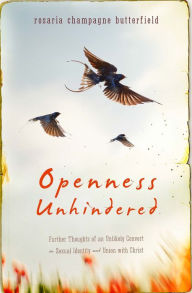
Book Review: Openness Unhindered

Openness Unhindered. Rosaria Champagne Butterfield. 2015. Crown & Covenant. 200 pages. [Source: Bought]

Openness Unhindered: Further Thoughts of an Unlikely Convert by Rosaria Champagne Butterfield was an interesting, weighty read. This isn't one to rush through, but, one to thoughtfully and deliberately engage with. I spent about two weeks reading this one, and I am glad I didn't rush it.

In some ways, this book revisits the conversion experience Butterfield wrote about in her first book. She writes of what it means to be a Christian, to believe and trust in Christ. She writes of repentance and confession. She writes of sanctification and holy living. She talks a lot about sin, about the roots of sin, about the need to battle sin. She tackles doctrine, tackles it fiercely. One of the doctrines she tackles--one that doesn't get a lot of attention these days--is the Christian's union with Christ.

But this book offers readers more than that. It addresses sexuality (homosexuality and heterosexuality) and culture. She declares war on culture essentially and specifically examines minutely all the words used by both sides.

From start to finish, this one is a thought-provoking read. Even if you find yourself disagreeing here and there, I think you'll find it is one that you can engage with spiritually or intellectually or preferably both. I do think it would be interesting to read this one with someone else so that you could bounce ideas--reactions--back and forth and continue the dialogue.

From the preface:

  • Openness implies that we hold nothing back from the God who made us and will take care of us. We give him our heart, our desires, our hopes, our dreams, our struggles, our doubts, our fears, and our identity.
  • Unhindered means that we are unencumbered by our failures; that is, we do not keep record of the countless times that we have failed God in sin, failed our friends in carelessness, and failed our own conscience by willfully disobeying the God who loves us. Instead of recordkeeping, we pray for the gift to repent of our sin at its foundation. We pray for the gift of God that redeems our mind, allowing us to see not through eyes of flesh, but rather through eyes remade by the Holy Spirit. Instead of remembering our already and often-repented sin, we remember God’s covenant with us in Christ, and Christ’s faithfulness.
  • We violate those we love when we try to supplant Christ by trying to fill his role, or by removing ourselves from this lavish outpouring of love by refusing to take God’s point of view on the matter of sin—its nature, origin, and consequences. Christ loves his people best. We cannot love as he did. We cannot suffer as he did. We cannot redeem our lives, our worlds, or our relationships.
  • Christ redeems. Even our struggles, our failures, and our suffering are redemptive in Christ. But there is blood involved. There is a cutting off and a cutting away that redemption demands.
  • We all make choices along the path of our life journeys, but if sin is only about bad choice-making, we don’t need a savior. Sin is bigger and deeper and longer than bad choice-making.
  • It is not the absence of sin that makes you a believer. It is the presence of Christ in the midst of your struggle that commends the believer and sets you apart in the world. Real conversion gives you Christ’s company as you walk through the valley of the shadow of death.

From chapter one:

  • If God is the creator of all things, and if the Bible has his seal of truth and power, then the Bible has the right to interrogate my life and my culture, and not the other way around.
  • The internal mission of the Bible is to transform the nature of humanity. That is why unbelievers know it is a dangerous text.
  • “Knowing Jesus” demands embracing the Jesus of the Bible, not the Jesus of someone’s imagination. The whole Bible. Even the places that took my life captive.
  • Of course, there is only one thing to do when you meet the living God. You must fall on your face and repent of your sins. Repentance is bittersweet business. Repentance is not just a conversion exercise. It is the posture of the Christian.
  • To the sexual sinner, repentance feels like death—because it is. The “you” who once was is no longer, even if your old feelings remain. Consciousness of sin resides not just in how you feel, but more potently in who Jesus is and what he has done. Your point of view and Christ’s atonement impact like a slow-motion car crash, as you see how he satisfied God’s justice for you. For me. You smell the blood and hear the agony in spurts and fits and all of a sudden you see what you could not see before: you cost Jesus everything—life, dignity, respect, peace. And he did not deserve this. Not even close. But he did more than accept this fate. He embraced it, out of love for me, and a mysterious glory that only this kind of God-love can manifest. When you step into the atonement, you are no longer a bystander. The blood is on your hands. What happens in repentance of sin is you see Jesus: “He is clothed with a robe dipped in blood, and His name is called The Word of God” (Rev. 19:13).
  • According to God, sinful temptations are inclinations to do something or become something that cost Jesus his life for my sake.
  • When we defend our right to a particular sin, when we claim it as an “I am,” or a defining character trait, we are cherishing it, and separating ourselves from the God who promises rest for our soul through repentance and forgiveness.
  • Our feelings can—and often do—deceive us. When we believe that our sin is not really sin, we call God a liar, and we use our personal feelings as proof. All our personal feelings prove is that Original Sin and the deceptiveness of sin are inseparable.

From chapter two:

  • The question is, How does experience matter? Does personal experience serve as a form of truth? Can you trust your feelings? We become proficient at what we practice. This is true for obedience and for sin. What relationship does personal experience have with other frames of interpretation or worldview (including the Bible)?
  • If I create an identity carved out of my personal pain, even one caused by the sins of my flesh, I will forever struggle in a separate sphere from my God. For that reason, I believe that my personal experience must always be surrendered to what my triune God has done and who my triune God is. I cannot find my identity in what I have done. I can only find my identity in what God has done and is doing.
  • Union with Christ is part of the saints’ armor. Satan is the father of lies and the great deceiver whose crafty seductions initiated Adam’s fall.
  • Satan specializes in half-truths, in twisting the truth, and in appearing to redeem that which God calls sin. But nothing good comes of Satan. Nothing. Not even a question from Satan is innocent.
  • I was not converted out of homosexuality. I was converted out of unbelief.
  • The strength that the gospel promises is the strength found only in continued dependence upon Christ.

From chapter 3:

  • There is not one moment in the Bible where we see failure as a virtue. And anyone who conflates humility with failure fails to understand the importance of the first term and the seriousness of the second.
  • Conversion gives you the freedom to repent, not the freedom to expect failure. It was then that I got it: repentance and the love for God—and the obedience to his law that grows from them—were the missing links between shame and grace.
  • Because of our fallen natures, we expect that we will be repenting of sin until glory. But repentance is not simply proof of failure. It is, more importantly, a sign of God’s hand upon us. It is a conversion proof, as only a saved person can repent of sin.
  • Our culture resoundingly believes that life is to be interpreted from the point of view of how I feel and perceive things. This explains in part why we have become a Christian culture that admits sin rather than confesses it, and doesn’t linger long enough at the cross to know the difference.
  • If we value our point of view over God’s, we will be deceived and betrayed, as sin never takes a Sabbath rest. When we only admit a problem or concern or difference or something about us that we know is not right, we posture in blame shifting, wanting a watching world to see that this problem we have is of no choice of our own and therefore, at least from our point of view, should not be something whose responsibility we should have to burden.
  • When we reject Original Sin, we deny the suffering of Jesus on the cross, who paid our ransom because we could not.
  • When we confess sin, we own it. This means that sin does not come with a defense attorney who provides all of the excuses for why what God calls sin is really a grace in my life.
  • Original Sin is one of the most maligned worldviews of our day. Indeed, many evangelicals meet it with uproarious rejection.
  • One very difficult aspect about sin is that my sin never feels like sin to me. My sin feels like life, plain and simple. My heart is an idol factory and my mind an excuse-making factory, especially when it comes to dealing with the kind of sin that clobbers me the most—indwelling sin—the unrelenting, ever-present kind that never takes a Sabbath and that Paul references in Romans 7: “So now, no longer am I the one doing it, but sin which dwells in me” (v. 17); “But if I am doing the very thing I do not want, I am no longer the one doing it, but sin which dwells in me” (v. 20).
  • The Word is poison to sin when embraced by a heart made new by the Holy Spirit. You starve indwelling sin by feeding yourself deeply on the Word of God. Sin cannot abide in the Word. So, fill your hearts and minds with Scripture.
  • Our battles with sin draw us closer to union with Christ, and in that way much good comes from dealing with sin God’s way.

From chapter 4

  • If we privilege secular categories of personhood over and against God’s, we are doubting the Bible’s ability to understand humanity, and we are denying to ourselves our Maker’s instruction.
  • Everyone loses when we define ourselves using categories that God does not.
  • At a certain point, I realized that the Bible was God’s Word, and it had the right to condemn me, and not the other way around.
  • If you are a child of God, washed in the blood of Christ, you should never again be defined by or reduced to an “orientation” linked to a pattern of even persistent temptations.

From chapter 5

  • We can use words and words can use us.
  • As Christian brothers and sisters, we affirm Christ in us and working through us by grace alone, not our patterns of temptations, special interests, or even our physical conditions.
  • Original Sin distorts a person in the way that we are all distorted. It does not set apart someone struggling with unwanted homosexual lust as somehow more distorted, or inherently more broken. Original Sin causes the actual and indwelling sin. Original Sin levels the playing field. Original Sin posits what is true about all people as God declares in Genesis 6:5: “Then the Lord saw that the wickedness of man was great on the earth, and that every intent of the thoughts of his heart was only evil continually.” We pray that the Lord would reveal how we have been distorted by Original Sin from our inheritance in Adam, and for the imputation of this sin nature.

From chapter 7:

  • Community renders enemies friends, and strangers brothers and sisters. Christian community is family by adoption, as God weaves divergent strands into a tapestry of divine providence.
  • Adoption establishes my identity in Christ, my inheritance through Christ, and my mission because of Christ. Adoption is always both/and: it is about orphaned children and orphaned image bearers who lose the status of orphan through permanent sonship.
  • Adoption is not a second-choice inclusion; it is the only way to gospel identity. An adopted person receives all rights, privileges, and family history. Likewise, our identity as Christians is not divided among factions. Strangers and enemies become brothers and sisters through Christ’s blood. Hospitality in the home, neighborhood, and church starts with adoption and ends with keeping the Lord’s Day together, because the purpose of our adoption is worship.
  • Sin hurts the church. Public sins cause damage to the name of Christ and build horrific stumbling blocks between image bearers and their God. Sin brings down churches and families. But sometimes the smaller, private, socially acceptable sins can also be horrific. The sin of failing to reconcile because you think yourself better than your brothers or sisters can rot the life out of the fellowship of believers.

© Becky Laney of Operation Actually Read Bible