Saturday, February 4, 2023

14. Sounding Joy


Board book: Sounding Joy. Ellie Holcomb. Illustrated by Laura Ramos. 2022. [September] 24 pages. [Source: Library] 

First sentence: What does joy sound like? Is it quiet like snow? Does joy sound like the laughter of friends that you know? Is joy like the sound of a kiss on your cheek? Or like holding your breath when you play hide and seek? 

Premise/plot: Ellie Holcomb's Sounding Joy is a holiday [Christmas] board book to read aloud to little ones. [I say little ones, but it's also perfectly suitable for the whole family to share together]. It begins by asking readers--or listeners, I suppose--to think about what JOY looks like, sounds like, feels like. What is joy LIKE? It then goes on to share the nativity story of Jesus Christ. That was the full expression of joy. And it is packed with promises that are ever-relevant. Reminders that JOY, inexpressible, resounding, repeating JOY are yet to come. Every Christmas is a reminder of not only what has been fulfilled, but what is coming still.

My thoughts: I definitely enjoyed this one. I loved the art by Laura Ramos. I liked the connections. I liked that it isn't just one or the other. There is a strong connection between what happened in Bethlehem and our present lives. Our joy is found IN Jesus our savior. There is reason to celebrate, rejoice, give thanks, every single day because of Jesus. 

I would have reviewed this one in December of 2022 if my library hold had come in. I am reviewing it now because why wait until next December??? 

© Becky Laney of Operation Actually Read Bible

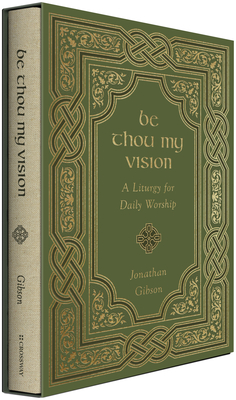
13. Be Thou My Vision


Be Thou My Vision: A Liturgy for Daily Worship. Jonathan Gibson. 2021. [November/December] 352 pages. [Source: Review copy]

First sentence: It may come as a surprise, but there is no explicit command in Scripture to have a time of worship each day, either as an individual or as a family. And yet it is a habit that every Christian believer or Christian family is encouraged to practice. The name of the habit may vary depending on one's Christian tradition or background--"devotion," "quiet time," or "personal or family worship"--but the basic elements of Bible reading and prayer are usually present. 

ETA: I first read this one in 2021. I liked--really liked quite a few things about it. I mentioned at the time that I wanted to give it a 'proper' go. To use it for a month--or two, or three--to see how well I liked it--or not. 

I started using the Be Thou My Vision devotional in December 2022. I also continued using it in January 2023. Now that I've read through it three times, I can now say that I definitely enjoy it. I do think it is solid and steady. 

Original review:

What you see is what you get. This is a LITURGY for DAILY WORSHIP. Thirty-one days of liturgical worship that can be repeated to infinity (and beyond). 

The structure of the liturgy for daily worship is:

CALL TO WORSHIP (thirty-one Scripture readings, these are taken from both Old and New Testaments)
ADORATION (thirty-one prayers--all focused on praise and adoration--taken from church history; I believe the doxology is included under this heading as well)
READING OF THE LAW (seven readings taken from Scripture--from both Old and New Testaments--regarding the law)
CONFESSION OF SIN (thirty-one prayers--all focused on confessing sin--taken from church history)
ASSURANCE OF PARDON (thirty-one Scripture readings--focusing on assurance of forgiveness of sins--taken from both the Old and New Testaments)
CREED (alternates three creeds, but one of the three creeds is divided into three; Apostles' Creed, Nicene Creed, Athanasian Creed)
PRAISE (Gloria Patri, two versions alternating weekly)
CATECHISM (refers you to an appendix where you'll read from the Heidelberg Catechism or the Westminster Shorter Catechism. These are undated; you are encouraged to read one question a day.)
PRAYER FOR ILLUMINATION (seven prayers from church history, repeated weekly)
SCRIPTURE READING (refers you to an appendix where they share the M'Cheyne reading plan. Here's where it gets confusing, the plan clearly has you reading FOUR chapters a day, but the book has you just reading one chapter a day????)
PRAYER OF INTERCESSION (thirty-one prayers from church history; you are also encouraged to pray on your own for personal, church, world needs)
LORD'S PRAYER (daily)

The book has five appendices: musical tunes for the Doxology and Gloria Patri, the two catechisms, the M'Cheyne reading plan, and the collects from the Book of Common Prayer, and author index. 

The book pulls in sources from all over--including the Book of Common Prayer. The structure is different from that of the Book of Common Prayer, and yet there are similarities to a certain degree. It does offer more variety in some ways. 

I think you could definitely improvise with this as well. You wouldn't have to read just one chapter from a daily reading plan that clearly and obviously has four readings. You wouldn't have to follow this reading plan at all.

I do wish that one of the sections was focused on the PSALMS and taking you through the Psalms each month. That's one of my favorite, favorite, favorite things about doing the Daily Offices from the Book of Common Prayer.

© Becky Laney of Operation Actually Read Bible

Friday, February 3, 2023

12. The Heidelberg Diary


The Heidelberg Diary: Daily Devotions on the Heidelberg Catechism. William J Ouweneel. 2019. 768 pages. [Source: Library]

First sentence: Q. What is your only comfort in life and in death? A. That I am no tmy own, but belong--body and soul, in life and in death--to my faithful Saviour, Jesus Christ. What a tremendous start for the catechism! We are not plunged right away into complex theological subjects, instead we are asked a very personal and very practical question. "Your" is singular here. You, Christian, what is your comfort? Whatever your sins, whatever your health condition, whatever you social, economic or any other circumstances, where do you find the comfort and consolation that helps you persevere? 

The Heidelberg Diary is a daily devotional. It is a thoughtful walk through the Heidelberg Catechism. That catechism has fifty-two "Lord's Day" questions and answers. Each Lord's Day has one to three questions and answers. (Sometimes less, sometimes more). Ouweneel has 'stretched' or 'expanded' those questions and answers to last all year long. Some questions and answers have four to five 'parts' or 'days' in this devotional. [I do wish that when he does this he would repeat the question! That would be my only suggestion really, to make it easier what question this answer is in response to.] 

The Heidelberg Catechism covers the basics. What are the basics? Well, at the very least--the Apostle's Creed, the Ten Commandments, and the Lord's Prayer. I believe there are also questions and answers about the sacraments of communion (aka Lord's Supper) and baptism. 

I absolutely LOVE the Heidelberg Catechism, I do. Especially the earlier questions. 

I read this library book in a few weeks. Obviously two weeks is not enough time to read this one as it was designed--one per day all year. I ended up reading twenty plus days per day. (Sometimes more! I remember one day covering a hundred days. Then I realized I didn't have to read it that quickly. That I could slow down some.)

I enjoyed this one for the most part. It does add in a lot of extras. (For better or worse). I think it adds context and detail on some theological issues. The devotions mainly are meaty and substantive. I would say that sometimes the author is critical of the original question and answer. Again for better or worse. (I can't say that I honestly agree 1000% with every single phrase in the original.) This comes into play when it comes to communion. He feels the original is inappropriately harsh and unfair to Roman Catholics. (This doesn't surprise me that the original would be strongly worded. And that *any* differences between Protestants and Catholics would be VERY strongly worded.) It also doesn't surprise me that modern believers would try to 'calm' the original. The author stresses that the original isn't always fair to Catholics because they are writing from a position that may unfairly represent what Roman Catholics believe(d). 


© Becky Laney of Operation Actually Read Bible

Thursday, February 2, 2023

11. Becoming Elisabeth Elliot


Becoming Elisabeth Elliot. Ellen Vaughn. 2020. 320 pages. [Source: Library]

First sentence: It was April 11, 1948 in Wheaton, Illinois, thirty miles west of Chicago. Jim Elliot was a junior at Wheaton College, a star wrestler, Greek major, poet, and jokester. 

Becoming Elisabeth Elliot is...you guessed it...a biography of Elisabeth (Howard) Elliot. This biography doesn't cover her whole life. It is, I believe, perhaps a first volume in a two volume biography set.  (Perhaps. It certainly felt like that was the set up). This one touches briefly on her childhood years, and goes to a more in-depth treatment of her high school and college years [there were journals]. Ultimately everything is building up to her courtship, marriage, and widowhood. Her husband, Jim Elliot, is one of five who were martyred. This husband-and-wife team were serving as missionaries in Ecuador. [There were five men and their families. Perhaps more in the area??? But these five were specifically seeking to witness to this particular tribe; it was a 'first contact' situation.] The biography ends in the early (maybe mid too) 1960s. Elisabeth Elliot has returned to the United States [after much disagreement with another widow] and is now writing Christian books. 

The book relies on Elisabeth Elliot's journals and books. 

I have read two maybe three books by Elisabeth Elliot...including several about her years in Ecuador. (One was on womanhood? or parenting?) 

I did learn more about Elisabeth Elliot. I knew the basic story, this biography fleshes it out in more context. I had made a few assumptions that I shouldn't have. (For example, I assumed that the five widows and their families would have stayed close/tight. That they would have supported each other. It was quite a shock to read of the super-tense, incredibly-tense relationship she had with Rachel Saint.) 

It gives a good, solid overview. But I don't think there's tedious amounts of details. (Though that could be subjective).

© Becky Laney of Operation Actually Read Bible
Monday, January 30, 2023

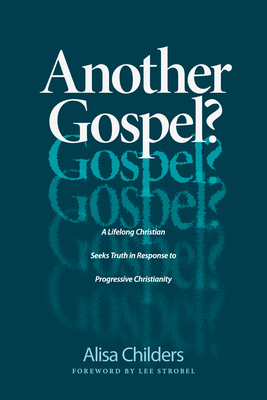
10. Another Gospel?


Another Gospel? A Lifelong Christian Seeks Truth In Response to Progressive Christianity. Alisa Childers. 2020. [October] 288 pages. [Source: Library]

First sentence: The curve of the rocking chair arm dug into my hip as I held my restless toddler, singing a hymn into the darkness--darkness so thick it felt as if it were made of physical matter, choking the cries right out of my throat as I prayed to a God I wasn't sure was even there. "God, I know you're real," I whispered. "Please let me feel your presence. Please."

Premise/plot: Alisa Childers writes of her experiences with progressive Christianity. She was encouraged to "deconstruct" by her pastor. There was a class and everything. But she held onto her faith even if she couldn't put into words why. His false teachings encouraged her to do anything and everything to 'prove' the WHY of her faith. She began digging deep, using all the resources, reading theology, studying church history. This battle with the false strengthened her faith and emboldened her message. She's been sounding off warning messages against progressive Christianity and deconstructing ever since. In this one she is showing readers that the "God" the "Jesus" of progressive Christianity is NOT the God of the Bible. That they are in fact preaching another Jesus, another gospel. 

My thoughts: I first became familiar with the author through a documentary I was watching a couple years ago. I then began watching her YouTube videos on her channel. I've not watched every one, certainly, but I've watched quite a handful. If you have seen every single video, then there isn't much new here in the book. Her testimony is good--something I believe the Holy Spirit can use--but it isn't exclusive to this book. She tells her story in several places.

I definitely enjoyed reading her story. I liked following her journey. 

© Becky Laney of Operation Actually Read Bible

Sunday, January 29, 2023

Sunday Salon #5


Current Bible plans and projects:


ESV Church History Bible (Daily Offices from the Book of Common Prayer).
 This week I read Psalms 107 - 138; Proverbs 22-28; Joshua 13-24; Judges 1-21; Ruth 1-4; 1 Samuel 1-20; Galatians 1-6; Mark 1-16; Ephesians 1-6. I am continuing to love this one.


ESV Large Print Thinline Reference Bible. I finished this one this week and reviewed it. The books I read this week were Psalms 90-150. 1 Peter. 2 Peter. Proverbs. Gospel of John. 1 John. 2 John. 3 John. Jude. Revelation. 

NRSV XL (Anglicized Catholic). This is the Bible I am now reading with the Be Thou My Vision devotional. (I was reading ESV Large Print Thinline). This one has a unique layout/size/design. I am liking it so far. This week I read 1 Chronicles. 2 Chronicles. Job. Ezra. Nehemiah. Song of Solomon. Wisdom of Solomon. Genesis. Exodus 1-15. (For the record, I am neither British nor Catholic. I just like the design/size of the Bible).

BSB M'Cheyne. I am reading this on the YouVersion app. Genesis 23-29; Matthew 22-28; Nehemiah 12-13; Esther 1-5; Acts 22-28. This week's plan saw the finishing up of Nehemiah, Matthew, and Acts! Sometimes this plan seems so slow...and then you get several 'accomplishments' all at once.

Growing 4 Life, January, Mark 1-4. I'm not sure if this week the FB group will be starting the next section of Mark or not? We'll see. Regardless, this past week I read Mark 1-4 in these translations: BSB, NASB 95, 1611 KJV, NASB 77, NLT, LSB, BSB. 

Current plans for other books:

I reviewed one Bible and two books this week! I also finished two books. I'll be reviewing them soon!

Questions:

Do you ever have trouble deciding what Bible to read or what Bible to read next? 
Have you read any good books lately?


© Becky Laney of Operation Actually Read Bible

Saturday, January 28, 2023

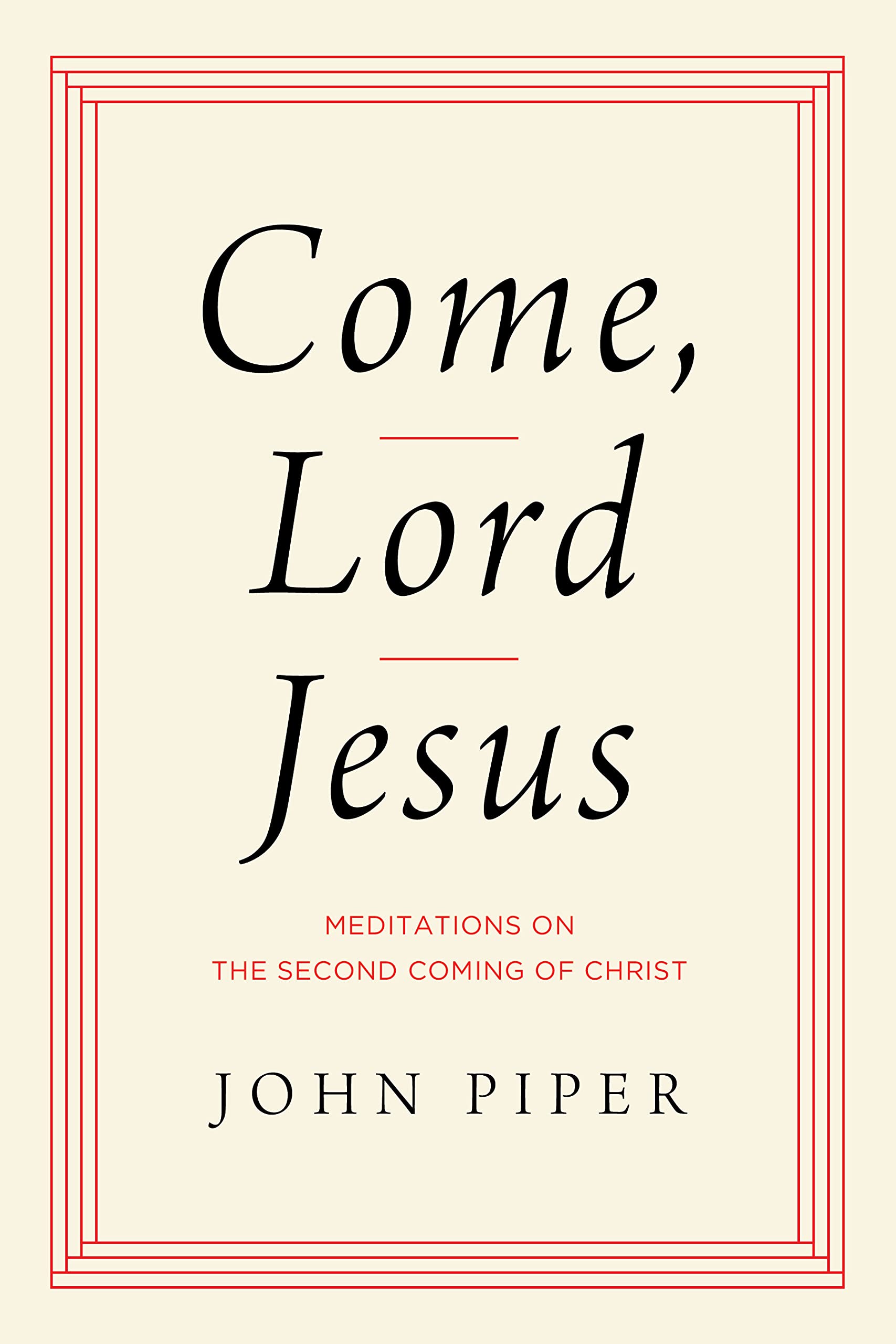
9. Come, Lord Jesus


Come, Lord Jesus: Meditations on the Second Coming of Christ. John Piper. 2023. [January] 322 pages. [Source: Review copy]

First sentence: The aim of this book is to help you love the second coming of Jesus Christ. The contents and title were inspired partly by the biblical prayers "Come, Lord Jesus!" (Revelation 22:20) and "Our Lord, come! (1 Corinthians 16:22). But mainly the book was inspired by the heart affection beneath these prayers which Paul expressed in 2 Timothy 4:8: There is laid up for me the crown of righteousness, which the Lord, the righteous judge, will award to me on that day, and not only to me but also to all who have loved his appearing. A crown of righteousness is promised to those who love the second coming of Christ. We pray for his appearing, because we love his appearing. 

Come, Lord Jesus is a weighty book. Perhaps I have misunderstood the word 'meditation' for most of my life--possible, for sure. I was expecting meaty devotions themed around the second coming, end times, last days, final judgment, heaven, new heaven and earth. I was not expecting a scholarly work packed--stuffed--with footnotes. I wasn't expecting Greek, Greek, and more Greek. There is a LOT for readers to unpack. This is no 5-minute-rice theology. 

The theme is right on target. I would say it covers--end times, signs of the the last days, final judgment, tribulation, second coming, rapture, new heaven and earth, etc. It spans the teachings of the New Testament (New Testament authors). It seeks to reconcile the teachings of Jesus and Paul, to name an example. 

I would say it challenges readers from the start. It asks much. And that's not a bad thing. To read without engaging this one would be a disservice. It asks you to think, to consider, to ponder, to wrestle with your own views and traditions. It holds the Bible in highest esteem. It lays out the Bible for you--chapter and verse. It unpacks all the angles. Piper has his views, but he is 'showing his work' if you will and not asking you to take his word for it on blind faith. 

I found it thought-provoking. Even when I wanted to stop thinking about it, I couldn't. The end times, like it or not, can make you squirm a bit, be a bit uncomfortable. There are some subjects where I tend to be a little like Scarlett O'Hara, I'll think about that tomorrow. For me, the end times is that subject I'm always pushing to tomorrow. I think because it is so easy to get confused and stay confused. Perhaps because it is a subject that can feel extra-heated. Sometimes people have very STRONG feelings on what they think will happen, how it all unfolds. Trigger warning: Piper doesn't hold to a separate rapture of believers occurring pre-tribulation (or mid-tribulation for that matter). He believes in ONE second coming--the verses that speak of believers meeting him in the air is the same second coming where he's coming to judge the world.

I can honestly say that I've never asked myself the question do I [actively] love the second coming of Christ. Passively sure I think many Christians fall into that camp. But actively--desiring, longing, hoping, loving--that's a BIG, bold statement. Piper, especially at the beginning and perhaps again towards the end, makes the argument that "the test of our love for the Christ who HAS appeared is our longing for the Christ who WILL appear." He argues that it is our LOVE for his appearing that enables us to ENDURE through anything/everything. It is our LOVE for his appearing, so Piper claims Paul writes, that protects our hearts and minds from loving this world too much, from becoming too entangled with worldly-world influences. It is our LOVE for his appearing that will encourage and promote holy living--sanctification. It is our LOVE for his appearing that will keep us gathering together as believers and encouraging one another. 

Piper further writes that it isn't enough to love certain things about his second coming [loving the gifts more than the giver] but our love for the second coming needs to fit into Christ's purpose for coming again. Here Piper does what Piper does best--talk about GLORY and delighting in the GLORY of the Lord. (Christian hedonism is Piper's default mode.) Here in this one it does make sense though.

He writes, "Absolutely crucial to God's ultimate purpose in the second coming is not only that the glory of Christ be revealed, but that it be loved. Rightly loved." 

I am glad I read this one. It may be worth revisiting again. For being a book about the end of times or "day of the Lord" it covers SO much theological territory. 

One of my favorite quotes:

Our hope is that the joy we have tasted in this life (1 Peter 2:3) will be given an injection of supernatural capacity beyond imagination. This is what Jesus prayed for. This is what will happen. God will pour his own love for Christ into us. We will enjoy Christ with the very enjoyment of God. It is true that our joy in Jesus even now is a work of God--God the Holy Spirit. Our joy in God and his Son is owing to the presence of the Holy Spirit in our lives, creating the capacity to delight in God and Christ (Romans 14:17; 15:13; 1 Thessalonians 1:6)... Jesus promises that he will go further: he will make God known in new and unimagined ways, with the result that God's own love for the Son will become more fully our own love for the Son, so that we will be able to enjoy Christ with the purity and intensity we ought. We will not be lamed by our present worldliness and remaining corruptions, and by the constrains of a fallen body.


© Becky Laney of Operation Actually Read Bible