Showing posts with label 2020. Show all posts

Thursday, August 28, 2025

61. CSB Scripture Notebook: Psalms


61. CSB Scripture Notebook: Psalms. God. 2020. 432 pages. [Source: Bought] [5 stars, Psalter]

First sentence: How happy is the one who does not walk in the advice of the wicked or stand in the pathway with sinners or sit in the company of mockers!

Essentially this one is a psalter with a built-in journal. On the left hand side of each spread, the Scripture text appears--the Psalms in the Christian Standard Bible translation--and on the right side of each spread is a lined page for journaling. The paper has a slightly creamy color to it. (Though I've seen creamier pages in Bibles. But it definitely isn't white-white.) The font size is 12 point. 

I read this one using the Book of Common Prayer's psalter schedule. I did read the last two or three days on one day so that I could get this one reviewed by the end of the month. 

This one would be great for those who a) enjoy the CSB b) want to give the CSB a try c) want to deep dive into the Psalms d) are looking for a SUPER portable way to carry Scripture with them. 

The CSB is not my favorite translation. I have read it through a handful of times, and, it's just not my favorite translation. I don't particularly care for how they translate the psalms. I like my psalms to "sing" to have a literary beauty and elegance. However, I was glad to spend time with this book. I would love it even more if it was in one of my favorite translations. The weight of the book, the font size, the lay out, everything is quite good. 

Psalms 23

The Lord is my shepherd;
I have what I need.
He lets me lie down in green pastures;
he leads me beside quiet waters.
He renews my life;
he leads me along the right paths
for his name’s sake.
Even when I go through the darkest valley,
I fear no danger,
for you are with me;
your rod and your staff—they comfort me.

You prepare a table before me
in the presence of my enemies;
you anoint my head with oil;
my cup overflows.
Only goodness and faithful love will pursue me
all the days of my life,
and I will dwell in the house of the Lord
as long as I live.

Psalms 100

Let the whole earth shout triumphantly to the Lord!
Serve the Lord with gladness;
come before him with joyful songs.
Acknowledge that the Lord is God.
He made us, and we are his—
his people, the sheep of his pasture.
Enter his gates with thanksgiving
and his courts with praise.
Give thanks to him and bless his name.
For the Lord is good, and his faithful love endures forever;
his faithfulness, through all generations.


© Becky Laney of Operation Actually Read Bible

Monday, July 28, 2025

7. ESV Creeds and Confessions


7. ESV Bible with Creeds and Confessions. Crossway. 2020. 1424 pages. [Source: Review copy]

First sentence: In the beginning, God created the heavens and the earth.

ETA: I read the ESV Creeds Bible the third time in 2025. My start date was January 8, 2025. My end date was July 28, 2025. I decided that since it was my third time through this Bible, and, it is becoming "mine" that I should feel comfortable marking in it. The paper was GREAT for marking with my Micron pens. 

How do I feel about the newly published ESV Bible with Creeds and Confessions?! I absolutely love, love, love, love, love, crazy love and adore this one. [ETA: I do wish the pages were less glaring or shiny when read under bright light. I have had to choose *where* to read this one so it is read in dimmer light.]

I read the TruTone edition of the ESV Creeds Bible. It was without a doubt the best FEELING Tru-Tone I've ever held in my hands. It is LOVELY. I typically make covers for my Bibles--this one won't be getting one. I love the feel of it too much. 

It is the text of the ESV translation. I do love the ESV. It is in my top three definitely. I love, love, love the ESV, the NASB, and the KJV. Those are my top three--have been for the past decade--and they take turns being the top. A little friendly competition between translations, I suppose! [ETA: I have found myself liking other translations more these days. The NKJV has moved up and the ESV has moved down one notch.]

Font size vs. Weight. I thought this was PERFECTLY BALANCED. The weight of the overall bible is just about perfect. The font size is 10.5. That is so much larger than the average Bible being printed nowadays. (The ESV Prayer Bible is 9.25; the ESV Study Bible is 9 point; ESV Student Study Bible is 8 point; The ESV Reformation Study Bible is 9 point.) It's light enough that you can hold the Bible and read--as opposed to a Bible you HAVE to read at a table because it's too heavy for the lap to sustain. Because it's light weight, the font size was very manageable even though my vision is poor.

Double column. The ESV Creeds Bible is double column. The bleed-through was on the minimal side. I didn't need to use black construction paper. I think the text was blocked in such a way that it helped prevent bleed-through.

Black letter. The ESV Creeds Bible is a black letter Bible. The words of Christ are not printed in red. I am thankful for this!

The Creeds and Confessions were found in the back of the Bible. They include the Apostles Creed (ca. 200-400), the Nicene Creed (325), the Athanasian Creed (381), the Chalcedonian Definition (451), the Augsburg Confession (1530), the Belgic Confession (1561), the Articles of Religion (1563), the Canons of Dort (1618-19), the Westminster Confession (1646), the London Baptist Confession (1689), the Heidelberg Catechism (1563), the Westminster Larger Catechism (1647), and the Westminster Shorter Catechism (1647).

I loved the variety of what they included. Some were familiar to me; others were new-to-me. They didn't include every single creed, confession, or catechism. One they did leave out was the Scots Confession (1560). Another was the Second Helvetic Confession (1566). 

It does include more creeds than the ESV Reformation Study Bible which only includes the Apostles’ Creed, the Nicene Creed, the Definition of Chalcedon, the Heidelberg Catechism, the Belgic Confession, the Canons of Dort, the Westminster Confession, the Westminster Larger Catechism, the Westminster Shorter Catechism, and the 1689 London Baptist Confession. 

It also has more creeds than the KJV Reformation Heritage Bible which only includes the Apostles' Creed, Nicene Creed, Athanasian Creed, Belgic Confession, Heidelberg Catechism, Canons of Dort, Westminster Confession, Westminster Shorter Confession, Westminster Larger Catechism.

I think the ESV Creeds Bible would make a great Bible to carry to church. It would be a great only Bible as well.

I think ESV should publish a Bible perhaps with families in mind and include the full text of the NEW CITY CATECHISM.

© Becky Laney of Operation Actually Read Bible

Thursday, July 3, 2025

53. I Still Believe


53. I Still Believe. Jeremy Camp. 2013/2020. 160 pages. [Source: Library] [4 stars, memoir, biography]

First sentence: Pick up your guitar. I didn't want to. I didn't want anything to do with music. It had been two weeks since Melissa had gone to heaven. My wife was only twenty-one, and we had been married just three and a half months when she passed away from ovarian cancer.

I Still Believe is Jeremy Camp's memoir. The edition I read was newly updated in timing with the 2020 movie release for I Still Believe. Both book and movie tell the love story of Jeremy and Melissa. 

The book provides so much more context to Jeremy's life--both before and after. The movie focuses almost exclusively on their love story and nothing but their love story. The book gives a much fuller picture in regards to Jeremy's spiritual journey AND his actual biography. Learning of his family, his childhood, his teen years, and the decade(s) following Melissa's life certainly gives you a more complete picture of who he is. 

The book and movie are both sad. Sad in a bittersweet way. Melissa's life was short--yet every day of her life's story was written by God [before one of them came to be] and written to bring him glory.

I Still Believe isn't necessarily a book [or movie] that you "enjoy." But I think there are spiritual lessons within both. 

© Becky Laney of Operation Actually Read Bible

Monday, December 2, 2024

57. Gentle and Lowly

Gentle and Lowly: The Heart of Christ for Sinners and Sufferers. Dane Ortlund. 2020. 224 pages. [Source: Review copy] [3 stars] [christian nonfiction, theology, devotional]

First sentence from introduction: This is a book about the heart of Christ. Who is he? Who is he really? What is most natural to him? What ignites within him most immediately as he moves towards sinners and sufferers? What flows out most freely, most instinctively? Who is he?

I read this book twice--back to back. Why???? This is not typical for me, at all. Mostly I reread it because I spent so much time confused. Confused about if any particular sentence (or paragraph, or chapter) was true or false, biblical or unbiblical. Perhaps that might sound a little harsh. Often when people talk about distorting scripture they mean it's really been stretched and twisted and warped and is completely off. I think what I mean about this one is much more subtle, demure even. I think in some places certain scriptures are becoming the whole prescription through which the author views the whole Bible. And no one verse is really supposed to have that much hold that you don't take a more grounded big picture approach to all of Scripture. This book also seems to push a few extremes. The narrative has a shock factor to it. Which also puts me on edge slightly. If this book offers something so new and life-changing and shocking, it implies that Christians have been getting it wrong for thousands of years. 

Perhaps this book uses a shocking approach to wake people up--to engage with readers in a way that most other theology wouldn't. To wake and shake the mental slumber, to get readers to think and consider, to ponder. 

This book is heavy on Puritans and the Word of God. The book seems to hold an incredibly high view of Scripture. It is not dismissive of Scripture. Which makes it even more confusing because you naturally want to believe that their interpretation of Scripture is correct. I imagine that there are many places where they do in fact get it right. But still there's something unsettling about a few of their positions, interpretations, takes.

So the one verse that they use as a prescription to interpret the entire Bible--Genesis to Revelation is Matthew 11:29. I love that scripture in context. It's a wonderful passage of scripture. But to view the entire Bible and say that that one verse sums up everything--EVERYTHING--that the Bible has to say about the heart of God is a bit too much for me. The author says something to the effect that the Bible only talks about the heart of God [of Jesus] in one place. And again that doesn't sit right with me because I strongly disagree. SO much about God is communicated throughout all of Scripture. And this one verse is far from the only place where Jesus' heart is on display. 

The topic of this one is how does Jesus feel about sinners and sufferers. I think the answer to this is revealed in many, many, many places. Of course the book doesn't just cover Matthew 11:29. Each chapter focuses on a single verse or single passage. OR perhaps in certain cases a particular book by a Puritan (when the Puritan is covering one passage or verse). 

Again, I think there are probably many true statements in this one. But there are a few that have me uncertain and questioning. If it was just a matter of easily discerning THIS is true THAT is false, the book would not be confusing. It's this weighing doubt where I truly don't know if my instincts are right or wrong. 


© Becky Laney of Operation Actually Read Bible

Tuesday, November 26, 2024

25. ESV Large Print Personal Size

25. ESV Large Print Personal Size. God. 2016 edition text, 2020 publication. 1952 pages. [Source: Bought]

First sentence: In the beginning, God created the heavens and the earth. The earth was without form and void, and darkness was over the face of the deep. And the Spirit of God was hovering over the face of the waters.

ISBN number for the one I'm reviewing: ‎ 978-1433555909

Start date: September 12, 2024
End date: November 26, 2024

I love the Bible. That much should at least be obvious. This is my twenty-fifth time through the Bible in 2024. I love the ESV, aka English Standard Version. I do. Is it the top of the top of the top in my list of translation preferences? No, but it's in my top four or five. 

This is a TEXT ONLY edition. There are a few textual notes, but no cross references. There are not book introductions. This is a very straight-forward, basic, no thrills edition of the ESV.

It is DOUBLE-COLUMN. Words of Christ are in red, not black. This is neither a good thing nor a bad thing. There are people who love black letter and people who love red letter. Red letter ESV bibles are harder to come by. So definitely if you are looking for red letter, this might be the one for you.

The font size. What can I say....It is GLORIOUS, FABULOUS, WONDERFUL. 12 point. It is LINE-MATCHED. 

It is the perfect weight, size. It is not too heavy. It is quite portable. 

Visually this bare-bones, basic bible has EVERYTHING I could ever want. Mostly. It is one of the best purchases I've made in a good while. 


© Becky Laney of Operation Actually Read Bible

Friday, August 30, 2024

41. Psalms in 30 Days

Psalms in 30 Days: A Prayer Guide through the Psalter. Trevin K. Wax. 2020. 353 pages. [Source: Bought] [5 stars] 

First sentence: For generations, Christians have prayed and sung the psalms. It was the prayer book of Jesus. It is the Old Testament book most often quoted in the New. The songs found in this book form the bedrock of both corporate worship and individual devotion.

Psalms in 30 Days is a PSALTER using the Christian Standard Bible as its basis. This one is not the Book of Common Prayer. But it is similarly inspired. It is too similar to be a coincidence in my opinion. That is neither good nor bad. It is also somewhat similar to BE THOU MY VISION and its follow up books. 

Readers get a liturgical prayer book to follow for morning, noon, and evening for thirty days. This takes the Book of Common Prayer one step further. Since most Books of Common Prayer only have morning and evening liturgies. The 1979 has a midday prayer liturgy, however, the psalms remain the same for each day of the month. 

This one does not stick exclusively to the Book of Common Prayer's confessions and canticles, if you will. It does expand beyond that for quotes and songs. 

Morning prayers include 
Call to prayer
Confession of faith
Canticle
Psalms
Gloria
The Lord's Prayer
Intercessions and personal requests
Prayer of the church (quotes)
Blessing

Midday prayers include
Call to prayer
Psalms
Gloria
Lord's Prayer
Blessing

Evening prayers include
Call to prayer
Confession of sin
Canticle
Psalms
Gloria
Lord's Prayer
Intercession and personal requests
Prayer of the church
Blessing

I followed the Book of Common Prayer for about two years. I've read through Be Thou My Vision two or three times. I've done this book once. I will say that while I do appreciate the liturgy and devotional practice it encourages, I am not that big a fan of the CSB. I think if this book utilized a translation of the Bible that I appreciated more, I would in turn like this book more. That being said, I have nothing against the CSB in general or people who use it as their primary translation. I do think that this book could be a great fit for others. 

© Becky Laney of Operation Actually Read Bible

Wednesday, May 29, 2024

11. The Daily Bible in Chronological Order (NIV 2011)


NIV 2011: The Daily Bible in Chronological Order with "narration" by F. Lagard Smith. 2020. 1730 pages. [Source: Bought]

First sentence: In the beginning God created the heavens and the earth.

When I found this one at a thrift store, I was super excited because I misread the copyright of the narrated notes by F. Lagard Smith for the copyright of the translation. For most of the world, "which" year for the NIV is a non-issue. There is a percentage for which it matters a great deal. NIV 84 forever! I partly jest. Still the NIV 84 is what I first read and loved. It is ALL the comfort and nostalgia I need. Have I moved on? Yes. Mostly. But don't ask me to gush about the NIV 2011. 

This one is arranged into daily dated readings. It is single columns. Each day's reading is marked with a symbol. It is black letter. The font size was decent. It is, of course, chronological, that is what sets this one apart from other Bibles.

I first read the NARRATED BIBLE in 1997 or 1998. It was the second Bible I read cover to cover. I read the NARRATED Bible in three weeks--in between Christmas and the start of the next college semester--so mid January. I absolutely fell in love with F. Lagard Smith's narration. It was just a great experience all around. So I was happy to try to recreate that with this one. Same notes or narrations, different translation. It wasn't the same experience. 


© Becky Laney of Operation Actually Read Bible

Tuesday, May 21, 2024

10. CSB Holy Land Illustrated Bible


CSB Holy Land Illustrated Bible. (Christian Standard Bible) God. 2020. 2000 pages. [Source: Bought]

First sentence: In the beginning God created the heavens and the earth.

The CSB Holy Land Illustrated Bible features articles (dare I say hundreds?) previously published by the "Sunday School Lesson Illustrator" and "Biblical Illustrator." These are articles--heavily illustrated articles--that provide background and context to biblical times, biblical cultures. Every book of the Bible--even super short books--feature at least one or more articles. Some books have more articles than verses!

The Bible features the Christian Standard Bible translation. It is double column.  The columns are wider than some. It is black letter. The Words of Christ do not appear in red. There are book introductions. The articles are the 'main attraction.' Though I will say that I do not mean that the articles replace the text of the holy inspired word of God. I am not assigning that intention to those who created this incredible layout. I simply mean that if a person was seeking to choose A CSB bible to purchase, the articles might be the selling point. 

There are pros and cons to the CSB Holy Land Illustrated Bible. The fantastic COLORFUL illustrations and visual-heavy layout create several opportunities. The PAPER is fantastic. There is NOT any ghosting. Or very, very, very minimal ghosting. But the volume of articles AND the thickness of the paper do make for an extremely bulky, literally heavy Bible. As a reference Bible, I think the Bible definitely something to consider. If you are one who reads the Bible primarily at a desk or at a table, I do think the heaviness will not be a distraction. If you are someone who primarily reads the Bible in a comfy chair, then this isn't the best lap Bible. I think if one were to read short sections--perhaps two to four chapters per day, it could be manageable. If you are a Bible glutton--like me--then this may not be the best fit for say the Bible in 90 days challenge. 

I can appreciate the quality of the paper. It is truly rare to find a Bible with little to no ghosting. Visually, this one is fantastic. Without reading a single word, you are swept away. It does stand out or stand apart from most other Bibles. 

The quality of the articles isn't something I am super prepared to judge. Some were more interesting/fascinating than others for sure. Not all were equally engaging. A few were interviews. There were definitely a handful of articles that I truly did find engaging and informative. A few that I wanted to share what I had learned with someone else [before I forgot what I just learned.] Having read through it once, it will be a nice enough reference bible, but it isn't practical enough for every day use because it is so physically heavy. 

© Becky Laney of Operation Actually Read Bible

Wednesday, January 17, 2024

8. How To Get A Mommy To Sleep


How To Get a Mommy To Sleep. Amy Parker. Illustrated by Natalia Moore. 2020. 32 pages. [Source: Library] [Children's book, picture book]

First sentence: Getting Mom to take a rest
is hard to do--it's true!
She seems to want to stay up late
No matter what you do!
The key is starting early!
When you get out of bed,
Make sure you're right by Mommy's side
Before she lifts her head.

Premise/plot: This picture book has some role reversal going on. A young child is telling readers how to properly take care of Mom--all day and all night. 

My thoughts: This one was cute. There are clues throughout that give it a Christian twist. Like a banner/sign/decoration in their home that says, "Be still and know that I am God." The illustrations celebrate the ordinary home life--a blessing from the Lord for sure. In one illustration, for example, the mom is surrounded by her two kids and her CAT. The illustrations don't always match perfectly with the narrative. Sometimes they reveal the messiness of life instead of good intentions. Sometimes the illustrations hold all the humor. For example, the child is encouraging you, the reader, to help your mom at the store by keeping the list and checking things off. Meanwhile the illustrations reveal, him putting FIVE boxes of Dino O's in the cart. I'm going to guess this is a sugary cereal that they maybe don't need five boxes of! (Though I could be wrong and it could be dinosaur shaped pasta.) The book ends with a prayer.

© Becky Laney of Operation Actually Read Bible

Wednesday, August 16, 2023

58. No Greater Love


No Greater Love: Experiencing the Heart of Jesus. A.W. Tozer. 2020. 158 pages. [Source: Library]

First sentence: Sometimes we can go too far and exaggerate, making statements by using a superlative. However, it is quite difficult to exaggerate the vital importance of the teaching of our Lord in the opening verses of John 3. It is wholly revolutionary. It is sharply classifying; it excludes and includes, it divides and distinguishes human beings from each other. 

NO Greater Love is a collection of Tozer teachings [sermons, writings] on the gospel of John. It doesn't have a chapter for each chapter of the gospel. Though I believe there are a handful of Tozer books that cover the gospel of John and/or the writings of John. (I know I've read some on Revelation and John). 

The main theme or main subject focus of this one is the love of God [as displayed/illustrated/shown] in the gospel of John. This isn't so much a commentary on the gospel of John as it is a commentary on society and the modern church. You might think this would make the book dated. After all, if you're in the know, you know that Tozer died in 1963. How could his thoughts on the direction of the church, the direction of society, the flaws of mankind still be relevant. Tozer is ancient, right???? WRONG. Tozer reads truth [from Scripture] into his analysis. And human nature--human SIN nature--doesn't change. Jesus Christ does not change. He's the same yesterday, today, and forever. So if and when Tozer is right on something--he's forever right. 

I love Tozer's tell-it-like-it-is. He doesn't sugarcoat anything. He's honest. He's zealous. His zeal for the truth, his zeal for the Word of God, for Jesus is undeniable.

Did I agree with everything in this one? No. There were a few theological points where we do not see eye to eye. We just disagree, end of story. But I still love Tozer. I still really love Tozer. [He does have one chapter on free will and man's will in salvation.]

Quotes: 

I believe in the brotherhood of man. I believe there is a universal brotherhood of the once born, and then I believe in a universal brotherhood of the twice born. Where our modern and liberal friends make their mistake is that they do not distinguish between the once born and the twice born. They make a universal brotherhood and say everybody is in. Jesus makes a universal brotherhood and says everybody is out except those who are born again. 

My sin does not overwhelm the love of God. Rather, the love of God overwhelms my sin.

I cannot think my way into God's presence. It is the love of God that overwhelms me and opens up the gate into His presence. God's great delight is to overcome our depravity. As bad as we are, we are not too bad for God to deliver us from that depravity and bring us into the brightness of His delight.

There is one distinctive road to heaven, and that is the Lord Jesus Christ. And the train that gets me from here to heaven is the unconditional love that Christ has for me. Once I am on board that train, nothing else seems to matter. 

I am going to heaven--not because I die. I am going to heaven because I have accepted the Lord Jesus Christ and I have allowed His love to flow into my heart and overwhelm me with desire and adoration for Him.

God loves me because He created me in HIs image, and that is the end of it. I do not bring anything except God's love for me.


© Becky Laney of Operation Actually Read Bible
Thursday, February 2, 2023

11. Becoming Elisabeth Elliot


Becoming Elisabeth Elliot. Ellen Vaughn. 2020. 320 pages. [Source: Library]

First sentence: It was April 11, 1948 in Wheaton, Illinois, thirty miles west of Chicago. Jim Elliot was a junior at Wheaton College, a star wrestler, Greek major, poet, and jokester. 

Becoming Elisabeth Elliot is...you guessed it...a biography of Elisabeth (Howard) Elliot. This biography doesn't cover her whole life. It is, I believe, perhaps a first volume in a two volume biography set.  (Perhaps. It certainly felt like that was the set up). This one touches briefly on her childhood years, and goes to a more in-depth treatment of her high school and college years [there were journals]. Ultimately everything is building up to her courtship, marriage, and widowhood. Her husband, Jim Elliot, is one of five who were martyred. This husband-and-wife team were serving as missionaries in Ecuador. [There were five men and their families. Perhaps more in the area??? But these five were specifically seeking to witness to this particular tribe; it was a 'first contact' situation.] The biography ends in the early (maybe mid too) 1960s. Elisabeth Elliot has returned to the United States [after much disagreement with another widow] and is now writing Christian books. 

The book relies on Elisabeth Elliot's journals and books. 

I have read two maybe three books by Elisabeth Elliot...including several about her years in Ecuador. (One was on womanhood? or parenting?) 

I did learn more about Elisabeth Elliot. I knew the basic story, this biography fleshes it out in more context. I had made a few assumptions that I shouldn't have. (For example, I assumed that the five widows and their families would have stayed close/tight. That they would have supported each other. It was quite a shock to read of the super-tense, incredibly-tense relationship she had with Rachel Saint.) 

It gives a good, solid overview. But I don't think there's tedious amounts of details. (Though that could be subjective).

© Becky Laney of Operation Actually Read Bible

Monday, January 30, 2023

10. Another Gospel?


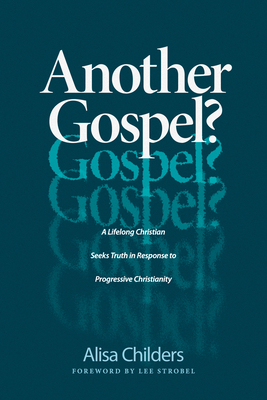
Another Gospel? A Lifelong Christian Seeks Truth In Response to Progressive Christianity. Alisa Childers. 2020. [October] 288 pages. [Source: Library]

First sentence: The curve of the rocking chair arm dug into my hip as I held my restless toddler, singing a hymn into the darkness--darkness so thick it felt as if it were made of physical matter, choking the cries right out of my throat as I prayed to a God I wasn't sure was even there. "God, I know you're real," I whispered. "Please let me feel your presence. Please."

Premise/plot: Alisa Childers writes of her experiences with progressive Christianity. She was encouraged to "deconstruct" by her pastor. There was a class and everything. But she held onto her faith even if she couldn't put into words why. His false teachings encouraged her to do anything and everything to 'prove' the WHY of her faith. She began digging deep, using all the resources, reading theology, studying church history. This battle with the false strengthened her faith and emboldened her message. She's been sounding off warning messages against progressive Christianity and deconstructing ever since. In this one she is showing readers that the "God" the "Jesus" of progressive Christianity is NOT the God of the Bible. That they are in fact preaching another Jesus, another gospel. 

My thoughts: I first became familiar with the author through a documentary I was watching a couple years ago. I then began watching her YouTube videos on her channel. I've not watched every one, certainly, but I've watched quite a handful. If you have seen every single video, then there isn't much new here in the book. Her testimony is good--something I believe the Holy Spirit can use--but it isn't exclusive to this book. She tells her story in several places.

I definitely enjoyed reading her story. I liked following her journey. 

© Becky Laney of Operation Actually Read Bible

Thursday, January 26, 2023

7. Stop Calling Me Beautiful


Stop Calling Me Beautiful: Finding Soul-Deep Strength in a Skin-Deep World. Phylicia Masonheimer. 2020. [February] Harvest House. 208 pages. [Source: Review copy]


First sentence: I attended my first Bible study when I was 16 years old. I came into the house clutching my copy of Beth Moore’s Believing God and spent the next sixteen weeknights glued to my pastor’s TV screen.

ETA: While most of my review (below) will be reprinting my first review, I just have to add several things. I really loved this book the first time around. I am surprised (should I be???) that this is the review that consistently gets a lot of likes on GoodReads. So I've always meant to reread this one at some point. When I saw it was available at the library, I decided to give it another read. 

Original review: I have a confession to make. I may do a decent job of not judging a book by its cover. Most of the time. But. When it comes to christian books--especially nonfiction books--I tend to judge a book by its publisher. Stop Calling Me Beautiful is published by Harvest House. Yet the description of this one sounded GREAT. Like the author and I would get along well. For she too opposes "pink fluff" theology written by women, for women, that consists of little real substance.

She addresses three problems that she sees in typical women's ministries: 1) Christian women are being taught a message that is theologically deficient. Modern women’s ministry’s framework for presenting and understanding God contains pieces of truth, but these pieces do not present an accurate picture of God and the gospel. 2) The message we’re hearing is self-focused. Flawed theology always turns attention away from God and onto ourselves, and that’s exactly what has happened with women’s ministry today. 3) The message is superficial, watered-down.

She concludes, "Theological education—learning about God, the Bible, and how these truths apply to life—is not just for men or for those called to ministry. Women must be spiritually equipped with the knowledge of God through His Word so they can minister to the people around them...The true gospel is available to all of us through God’s Word. We must learn to study it. We must know it well enough to rightly divide the truth and check teachings against the Word of God as the Bereans did (Acts 17:11). In other words, we must cultivate a holy curiosity." I couldn't agree with her more!

The book doesn't focus, however, on how everyone else is doing it wrong. Far from it. Most of the book serves either as a first introduction or a refresher course on the Christian faith, on how to live the life and walk the walk daily.

I found myself highlighting passage after passage. I guess you could say I was nodding my head and going, YES.

Here are some of my favorites:

  • Desire and delight become an endless circle in the presence of the living God. 
  • Our self-discovery is not God’s goal. We are meant to know God and make Him known. This is the great adventure for which our hearts long!
  • We don’t go deeper with God by reflecting more on ourselves, or even by reading God’s Word to look for insight about ourselves. Roots of spiritual growth develop as we seek God for who He is and allow Him to do the transforming work in our hearts that we can never do on our own. He is the one who plants the desire to seek Him. He is the one who meets us when we apply diligence in faith.
  • Bible study is as simple as actually reading the Bible. You don’t need to know everything up front to learn and appreciate what God says in His Word. But you do have to be willing to start. From that heart of willingness, you can add resources for deeper study. These will add depth to the places, people, and terms you read in the Bible, transforming what used to be drab and gray into the living color of God’s redemption story.
  • We need the full gospel—the gospel that began in Genesis and runs to Revelation like a “scarlet thread”, a continual story written in blood—in order to find a deeper spiritual life in this shallow world. Finding this life is not easy. It takes diligence. But diligence is what a student of any kind must cultivate in order to gain knowledge. And that’s what we, as believers, need to do.
  • God insists on our involvement in Christian community. We are called to vulnerability, transparency, and the sharing of our burdens. Without this, we cannot grow as believers.
  • We can’t draw near if we don’t open our Bibles and read them ourselves, if we don’t put ourselves into godly community, and if we don’t receive discipleship and accountability. We live abundantly when we regularly expose ourselves to the work and Spirit of God. When we do, the things that used to bore us take on the color of abundant life.
  • Your brokenness is real, but it is not your identity. It is not an excuse, and it is not your future.
  • The goal of time with God is worship of God.
  • God is the most valuable, worthy person we will ever know. Yet we often attribute more worth and value to sleep, social media, and friends than we do to Him. Our worship is naturally revealed through our daily habits and behaviors. The things we think, say, read, watch, and do reveal what we’re worshipping.
  • There is no quick fix for a soul-deep struggle. Though it’s not easy and certainly not quick, Jesus never makes a promise He won’t bring to fruition. 
  • Overcoming anxiety is the daily choice to come. When we feel weary, burdened, and overwhelmed, changing our schedules and habits will help, but these will not bring us lasting victory. Being present and letting go of perfectionism will help us make great strides, but these actions will not cut to the spiritual root of anxiety. Anxiety is overcome when we make the choice to trust God more than we trust our emotions.
  • Victory is not defined by never feeling anxious. 
  • You don’t have to like your circumstances to depend on God in the midst of them. 
  • Our grief is known and carried. Our loss is not pointless. 
  • You can’t love someone and condemn them at the same time! 
  • In one of life’s great dichotomies, we fear losing what we value most—even when the thing we value is destroying us.
  • Repentance does not entail rehearsing our unworthiness (to ourselves and others) over and over again for the purpose of glorifying God. We glorify God best when we turn from our sinful ways, embrace the worthiness He has given us in Christ, and live out that worthiness by the Holy Spirit’s power.
  • Without grounding ourselves in the Word of God we can’t live by the truth of God. Without living by the truth of God we can’t live out the freedom of God. An overcoming life is the product of consistent exposure to God through His Word. This isn’t another reminder to do your devotions. This is war! Abundant life doesn’t happen apart from God, and God has revealed Himself in Scripture.
  • We think in terms of the big picture, but our lives are actually lived in the mundane moments, and our legacy is less about the world at large and more about our immediate communities. But here’s the kicker: We can’t impact our communities if we’re constantly playing whack-a-mole with our sinfulness. And we can’t overcome our sinfulness—or the difficulties of this world—apart from Jesus. To truly make a difference in the world, we have to know the Creator and Redeemer of the world on an intimate level. We have to be women of spiritual depth.
  • We change our communities by letting Jesus change our lives in front of, alongside, and within our communities. 

© Becky Laney of Operation Actually Read Bible
Wednesday, December 7, 2022

42. Zanna's Gift


Zanna's Gift. Orson Scott Card. 2020. 250 pages. [Source: Review copy]

First sentence: There are many ways to lose a child, and none of them is merciful. But like all unbearable things it can be borne, and in the weeks before Christmas 1938, the Pullmans were learning how.

Premise/plot: Zanna's Gift is a LOVELY Christmas novel. Zanna, the youngest of the Pullman family, has a special way to memorialize her older brother, Ernest, after his unexpected death at age fifteen.

The best way to read Zanna's Gift is without knowing a thing about it. I promise you. I'm doing you a favor by NOT summarizing the plot and sharing what Zanna's GIFT was and how it was a gift that kept giving and giving, how that gift came to symbolize so much to the entire family. 

My thoughts: LOVE. I loved this one absolutely and completely from start to finish. It was one of those perfectly perfect EXPERIENCES. It feels like more than just a book, a story, a fictional work. THESE CHARACTERS ARE REAL. How it hasn't been adapted into a movie if it was truly published originally in 2004 is beyond me. It would make an excellent movie.

I would recommend this one to people who aren't necessarily readers. Of course I recommend it to readers who read anything and everything. But for those who are reluctant to pick up books, please consider reading this wonderful amazing book. 

If you LOVE Christmas, this is an absolute must. I could easily see it becoming a book that you feel you HAVE to read each and every year. 

This was my SECOND year to read Zanna's Gift. Last year I was surprised by how magical this read was--a celebration of life, love, and family. This year I was reminded of just how beautiful and touching it is. These characters have remained with me throughout the year. 

Is it Christian fiction? Maybe? Faith plays out in the background of this one. Faith isn't fleshed out in this one--in terms of theology. But I'm not so sure it needs to be for the beautiful themes to come through. There is nothing in Zanna's Gift that is anti-Christian. It is a treat of a book for ALL readers regardless of faith background. 


© Becky Laney of Operation Actually Read Bible

19. Berean Standard Bible


Berean Study (changed to Standard) Bible. 2020. 1504 pages. [Source: Gift]

First sentence: In the beginning God created the heavens and the earth.

I've read the BSB translation three times now. I just absolutely love, love, love this translation of the Bible. 

It is now available on Olive Tree app and YouVersion. 

The Berean Study Bible is a (relatively) new translation recently made available in print. It has been available online at Biblehub.com since 2016 (I believe.) It is important to realize, however, that it is not your traditional "study" Bible. It is a text-only Bible. The study element is what you put into it by being a Berean (Acts 17:11). You put in the work, the effort, the energy--and it will be a study Bible.

From their website, "The Berean Study Bible is a completely new translation based on the best available manuscripts and sources. Each word is connected back to the Greek or Hebrew text, resulting in a transparent and honest text that can be studied for its root meanings. The Berean Study Bible text is the result of a careful translation and styling process to maintain core meanings and produce an English text of high literary quality, effective for public reading, study, memorization, and evangelism. We believe that the Scriptures are meant to be studied and shared freely. Just as Paul encouraged the churches to pass on his letters, we are developing digital resources that will be free to access and free to share in websites, apps and software."

I absolutely love, love, love, LOVE, love this translation. It feels like coming home. It feels familiar, right.  Of course, many translations feel familiar. But that is often the result of months even years. It is hard to explain. 

BSB

The Lord is my shepherd; 
I shall not want.
He makes me lie down in green pastures;
He leads me beside quiet waters.
He restores my soul;
He guides me in the paths of righteousness
for the sake of His name.
Even though I walk through the valley of the shadow of death,
I will fear no evil,
for You are with me;
Your rod and Your staff, they comfort me.
You prepare a table before me
in the presence of my enemies.
You anoint my head with oil;
my cup overflows.
Surely goodness and mercy will follow me
all the days of my life,
and I will dwell in the house of the Lord
forever.

This third time through, I read it with the Daily Offices of the Book of Common Prayer. 

About the print edition, the layout is great. Good size font. A good bit of space on each page. (Perhaps not enough for notetakers, but this isn't claiming to be a notetaker's edition). Nothing looks crowded or crammed. It is black letter!!! The only slight negative is that it is a bulky Bible. It is a bit heavy. But once you've got where you're going, once it's on your lap or on the table/desk in front of you, you forget all that. 

© Becky Laney of Operation Actually Read Bible

Thursday, April 14, 2022

5. NASB 2020


Holy Bible, NASB 2020. Lockman Foundation. 2020. 4068 pages. [Source: Bought]

First sentence: In the beginning God created the heavens and the earth.

This is my third time to read the 2020 update to the New American Standard Bible. This time around I read it on the YouVersion Bible app using the Power 60 Day Bible Reading Plan. Sixty days is a short span of time to read through the entire Bible. 

I neither love or hate the NASB 2020. I do love, love, love, love crazy love the NASB 95. And I really LOVE the NASB 77. I do not ever see the NASB 2020 taking the place of either the 95 or the 77 in my heart. That being said, I'm not adamantly opposed to the update. It doesn't make me angry that it exists.

I would definitely recommend that (potential) readers spend a few weeks reading the NASB 2020 translation on an app like YouVersion (or BibleGateway) or the computer to get a good grasp of whether or not this translation is worth owning in a physical copy. 


© Becky Laney of Operation Actually Read Bible

Saturday, December 18, 2021

85. Zanna's Gift


Zanna's Gift. Orson Scott Card. 2020. 250 pages. [Source: Review copy]

First sentence: There are many ways to lose a child, and none of them is merciful. But like all unbearable things it can be borne, and in the weeks before Christmas 1938, the Pullmans were learning how.

Premise/plot: Zanna's Gift is a LOVELY Christmas novel. Zanna, the youngest of the Pullman family, has a special way to memorialize her older brother, Ernest, after his unexpected death at age fifteen.

The best way to read Zanna's Gift is without knowing a thing about it. I promise you. I'm doing you a favor by NOT summarizing the plot and sharing what Zanna's GIFT was and how it was a gift that kept giving and giving, how that gift came to symbolize so much to the entire family. 

My thoughts: LOVE. I loved this one absolutely and completely from start to finish. It was one of those perfectly perfect EXPERIENCES. It feels like more than just a book, a story, a fictional work. THESE CHARACTERS ARE REAL. How it hasn't been adapted into a movie if it was truly published originally in 2004 is beyond me. It would make an excellent movie.

I would recommend this one to people who aren't necessarily readers. Of course I recommend it to readers who read anything and everything. But for those who are reluctant to pick up books, please consider reading this wonderful amazing book. 

If you LOVE Christmas, this is an absolute must. I could easily see it becoming a book that you feel you HAVE to read each and every year. 

This was my SECOND year to read Zanna's Gift. Last year I was surprised by how magical this read was--a celebration of life, love, and family. This year I was reminded of just how beautiful and touching it is. These characters have remained with me throughout the year. 

Is it Christian fiction? Maybe? Faith plays out in the background of this one. Faith isn't fleshed out in this one--in terms of theology. But I'm not so sure it needs to be for the beautiful themes to come through. There is nothing in Zanna's Gift that is anti-Christian. It is a treat of a book for ALL readers regardless of faith background. 


© Becky Laney of Operation Actually Read Bible

Monday, December 13, 2021

84. We Will Not Be Silenced


We Will Not Be Silenced: Responding Courageously To Our Culture's Assault on Christianity. Erwin W. Lutzer. 2020. [November] 288 pages. [Source: Review copy]

First sentence: The disciples asked Jesus an interesting question: "Lord, will those who are saved be few?" (Luke 13:23). Haven't we all wondered how many people will be saved and how many lost?

I wouldn't be surprised if some readers make the conclusion that Erwin Lutzer doesn't go far enough in his cultural analysis and the dangers facing every Christian--particularly American Christians--and other readers may reach the conclusion that he goes too far. 

If even a third of the things Lutzer mentions--calls out, cries out against--are true, there are reasons for the church--the true church--to be concerned. For better or worse--most likely worse--the American church might be said to be on the sleepy/lazy side. Believers--both as individuals and as a group--tend to fall asleep when we most need to stay alert. Consider the disciples, for example. Several times in Scripture, believers are called to wake up. The call to wake up is not necessarily a call to panic. I want to make that clear. Lutzer's call is not for Christians to join together and panic. It is a call, in my opinion, to wake up and wipe the sleep from our eyes. To look and watch. To trust and obey. To pray and praise. To perhaps make (more) informed choices. 

I love, love, love his purpose: "I write not so much to reclaim the culture as to reclaim the church." Again his goal is NOT to "take America back." 

Lutzer definitely makes a clear distinction between the one, true church--the "invisible" church--and the more inclusive "church" that seems to include anyone/everyone who has ever at any time--for any length of time--professed to be "a Christian." If a Christian is anyone who has ever at any time said "hey, I'm a Christian" then sure, it's easy to say Christians hold a majority and they have never been silenced in any way. To clarify, there is a BIG difference between a literal silencing and a silencing from FEAR of "being canceled" or "facing consequences" of our "free speech." It would be an exaggeration to say that American Christians are truly in fear of their [actual] lives for exercising free speech and the freedom of religion. 

Tolerance is a one-way street. And Christianity isn't to be tolerated. So goes Lutzer's argument that the culture has long--many, many, many decades--warred against traditional, orthodox, historic Christianity. 

Progressive Christianity--or should that be progressive "Christianity" is not silenced, and has no reason to worry about being silenced. More often than not, progressive Christianity is walking--if not skipping or leaping--with the world: hand in hand, heart to heart. Everything in perfect alignment. 

Lutzer covers just about any and every subject/topic in this one. He urges his readers to look to the Word of God and NOT the world. Our faith should not be informed--taught, guided, led--by the world. There are dangerous world views. Conflicting dangerous world views. World views that unite in one thing--their dislike and hatred of Christianity. The world NEEDS the gospel; the world NEEDS those who are willing to openly testify and witness. The world NEEDS those to speak the truth IN LOVE. (Not those who keep silent OUT OF LOVE.) Real love, true love, the love we are called to have for the world--for all our neighbors--speaks the truth with grace. Because I love you, because I truly want you to know the truth, I am going to speak the truth even knowing that you may be offended. 

Lutzer, in my opinion, keeps pointing readers back to the good news of the gospel. Yes, these things are concerning BUT look to Christ, look to Christ's promises. That's why I think it's a call to wake up and not a call to panic. 

In some ways, it might be Lutzer preaching to the choir. Those most likely to read it are likely already somewhat concerned about the world we live in, the way our culture is. Those reluctant to read it--because they disagree fundamentally with this "narrow-minded" and "hateful" world view (aka traditional, orthodox, historic Christianity)--may see what they want to see. I think the book should be read with an open mind. Don't assume the worst about Lutzer and his position. 

ETA: The poem "To Be Fit for God" in Valley of Vision (pp 254-255) sum up the theme of this book so well!

I will NOT quote the whole poem, but I will quote a few lines.

Let me never slumber, never lose lose my assurance,
never fail to wear armour when passing through
enemy land.
Fit me for every scene and circumstance; 
Stay my mind upon thee and turn my trials to blessings
that they may draw out my gratitude and praise
as I see their design and effects.
Render my obedience to thy will holy, natural and delightful.
Rectify all my principles by clear, consistent, 
and influential views of divine truth.
Let me never undervalue or neglect any part
of thy revealed will.
May I duly regard the doctrine and practice of the gospel,
prizing its commands as well as its promises.

© Becky Laney of Operation Actually Read Bible

Thursday, August 19, 2021

6. NASB Large Print Reference Bible


NASB Large Print Ultrathin Reference Bible, 2020 text. 1472 pages. [Source: Gift]

First sentence: In the beginning God created the heavens and the earth.

This is my second time reading the NASB 2020. The first time I read the NASB 2020, I read the kindle edition. This time I read an actual physical copy of the NASB 2020. I read the Large Print Ultrathin Reference Bible published by Lockman. It released in August of 2020. 

Here's what YOU need to know:
  • The font size is 10.
  • Line matched typesetting
  • Two column text
  • Center column cross references
  • Paragraph formatting
  • Black Letter Text
  • 2 Ribbon Markers
  • Full set of translation footnotes
  • Color maps
My method for reading was a modified Professor Horner Bible reading plan. 

1) The Law -- Genesis, Exodus, Leviticus, Numbers, Deuteronomy
2) The Prophets: Joshua, Judges, 1 and 2 Samuel, 1 and 2 Kings, Isaiah, Jeremiah, and Ezekiel
3) The Twelve Prophets: Hosea, Joel, Amos, Obadiah, Jonah, Micah, Nahum, Habakkuk, Zephaniah, Haggai, Zechariah, and Malachi
4) The book of Psalms
5) The writings: Proverbs, Job, Song of Songs, Ruth, Lamentations, Ecclesiastes, Esther, Daniel, Ezra, Nehemiah, 1 Chronicles, and 2 Chronicles
6) Matthew, Hebrews, James, Jude
7) Mark, Romans, 1 and 2 Peter
8) Luke, Acts, 1 Corinthians, 2 Corinthians
9) Galatians, Ephesians, Philippians, Colossians, 1 and 2 Thessalonians, 1 and 2 Timothy, Titus, Philemon
10) John, 1 John, 2 John, 3 John, Revelation

I really LOVED, LOVED, LOVED the look and feel of this Bible. I thought it was the absolutely perfect weight. That is proportions of weight and font size were perfectly balanced. 

Do I love the NASB 2020 more than the NASB 1995 or 1977??? Probably not. But I don't dislike it either. 

© Becky Laney of Operation Actually Read Bible

Monday, April 19, 2021

25. Why Social Justice is Not Biblical Justice


Why Social Justice is Not Biblical Justice: An Urgent Appeal to Fellow Christians in a Time of Social Crisis.  Scott David Allen. 2020. [September] 205 pages. [Source: Bought]

First sentence: In recent years, a powerful ideology has made deep inroads into the very heart of the evangelical church. To its mainstream advocates, it is called “social justice” and is nearly always coupled with a commitment to equality, diversity, and inclusion.

There are probably dozens--if not hundreds--of reviews that will do this book on justice actual justice. Reviews that may break down the book chapter by chapter and analyze its contents and provide readers with clues as to whether this is the book for them--or not.

The premise of this one is simple: justice has been coupled--for better or worse--with social justice. Coupled by people without the church (outside the church) certainly, but also coupled by people within the church. Social justice is eclipsing biblical justice. People looking for justice are turning not to God, not to the church, not to the powers that be, but to society, to specific sections of society. 

The truth of the matter is that ANY definition of justice that discounts, discredits, ignores, belittles, twists, or distorts God's definition of justice is wrong. Plain and simple. God is Just. God is Righteous. God is Good. God is Wise. God is Omniscient, Omnipotent, Omnipresent. (In other words, all-seeing and all-knowing. He doesn't just know the outside actions--but the inward thoughts.) God is also the ULTIMATE (final) Judge. 

For Christians--those who profess to be Christians--to give more authority or credit to outside theories or world views when it comes to justice--or when it comes to anything really--is just all kinds of wrong. For example, Critical Race Theory, or CRT. CRT should not be used as a tool to reinterpret or "interpret" Scripture. (Neither should feminism or intersectionality). 

This book isn't written to persuade unbelievers--those outside the Christian faith--of the dangers of jumping on the social justice bandwagon. It is written primarily for those who profess to be Christ-followers (aka Christians, believers) to think biblically and with discernment about injustices in society. In other words, let the Word of God reign authoritatively in their lives--yes, even when it comes to living real life in a messy, messy super-fallen, soul-bruising world filled with tears, pain, and anguish. 

The truth is the Bible has a lot to say both in the Old Testament and New Testament about injustice and justice, about sin and righteousness, about right and wrong, about good and evil. The Bible gives us guidelines and principles, certainly, but it also gives us promises upon which we can base our hope. 

The book could have just focused on biblical justice--how the Bible treats the subject or doctrine of justice--but it also chooses to engage directly with the competition. It is all about comparing and contrasting the two: biblical justice AND social justice. It looks at them both from plenty of angles. It presents the flaws of social justice that Christians should be aware of before they open up their hearts and minds and embrace social justice. 

I would say one of the most important things is to be aware that even though both groups use some of the same words, the two groups mean very different things by those words. So though on the surface the two groups may appear to have much in common--a common goal that is of utmost important--there are major differences in play. People can with completely good intentions fall for it. Especially if they are more tuned into the news--TV, internet, radio--than the Word of God. 

The author does mention--and readers will already be aware--that both sides tend to resort (not even as a  last resort) to name calling and label-throwing. This isn't a kind, friendly debate--an exchange of ideas--but all out war. 

So the book is about dangers from the world, to a certain degree, but also about dangers within the church. It is the dangers within the church--coming from within--that prove costliest and feel like a betrayal. The Bible-believing Christian faces warfare from within and without--the church and the world. 

There isn't a quick solution. It isn't as easy as saying, well, we'll just skip this hot topic altogether and focus on the essentials. No, the author urges justice--BIBLICAL JUSTICE, justice on God's terms--is essential to a right practice of the faith. What we need is preaching and teaching on biblical justice. 

I definitely loved some of the chapters. I did. I found almost all of the chapters thought provoking. 

If I could change one thing about the book, however, it would be his historical discussion of Republicans and Democrats. I think he has perhaps intentionally left this vague and confusing. Instead of pointing out the labels "Democrat" and "Republican" have changed, transformed, evolved through the past hundred plus years, he acts as if they are still the same. For example, he goes on about how it was Democrats that were racists, that were pro-slavery, that were pushing all these racists laws, that founded the KKK, and that it was always Republicans who were the good guys, who stood in opposition to the hateful, despicable Democrats. If you are at all familiar with history, you know that you can't do that. Or perhaps you shouldn't do that. If you were to go back in time, what passes today for "Republican" and "Democrat" today would be unrecognizable and completely foreign. Policies, ideologies, beliefs, practices morph and change. The issues we argue and debate today would be completely foreign if not horrendously shocking to the past. And that's not because we're "better" people. The truth is the past would shock us and our values just as much as our "values" would shock the past. It works both ways. Anyway, to sum it up, the paragraphs were the author explores this argument weaken his argument--in my opinion. 

I did appreciate his argument not to conform to the world, not to accept the world's world views as your own, to cling to the Word of God, to fight the good fight, to live rightly by God's standards, to be the salt and light, the city on the hill. 
 

© Becky Laney of Operation Actually Read Bible