Thursday, June 11, 2015

Quotes from the Cloud #23

This year, I hope share weekly posts of quotes. These quotes are from authors I'm reading and enjoying from the Clouds of Witnesses Reading Challenge

For fellow participants, what I would LOVE, LOVE, LOVE to see is for people to share quotes from what they're reading. I'd love for you to share quotes occasionally with your readers and let me know about it. If you don't have a blog, you could always leave quotes in the comments here.
In order to be of service to others we have to die to them; that is, we have to give up measuring our meaning and value with the yardstick of others. To die to our neighbors means to stop judging them, to stop evaluating them, and thus to become free to be compassionate. Compassion can never coexist with judgment because judgment creates the distance, the distinction, which prevents us from really being with the other… "Do not judged and you will not be judged yourselves" is a word of Jesus that is indeed very hard to live up to. But it contains the secret of a compassionate ministry. ~ Henri Nouwen
Prayer is the work of faith alone. No one except a believer can truly pray. Believers pray, not on their own merits, but in the name of the Son of God, in whom they have been baptized. They’re certain that their prayers please God, because he commanded them to pray in the name of Christ and promised he would listen to them. We pray in response to God’s command and promise. We offer our prayers to God in the name of Christ, and we know that what we ask for will be given to us. We experience God’s help in all kinds of needy situations. And if relief doesn’t come soon, we still know that our prayers are pleasing to God. We know that God has answered us because he gives us the strength to endure. ~ Martin Luther, Faith Alone, June 11
In every believer's heart there is a constant struggle between the old nature and the new. The old nature is very active, and loses no opportunity of plying all the weapons of its deadly armoury against newborn grace; while on the other hand, the new nature is ever on the watch to resist and destroy its enemy. Grace within us will employ prayer, and faith, and hope, and love, to cast out the evil; it takes unto it the "whole armour of God," and wrestles earnestly. These two opposing natures will never cease to struggle so long as we are in this world. The battle of "Christian" with "Apollyon" lasted three hours, but the battle of Christian with himself lasted all the way from the Wicket Gate to the river Jordan. The enemy is so securely entrenched within us that he can never be driven out while we are in this body: but although we are closely beset, and often in sore conflict, we have an Almighty helper, even Jesus, the Captain of our salvation, who is ever with us, and who assures us that we shall eventually come off more than conquerors through Him. With such assistance the new-born nature is more than a match for its foes. ~ Charles Spurgeon, Morning, June 2

© Becky Laney of Operation Actually Read Bible

Wednesday, June 10, 2015

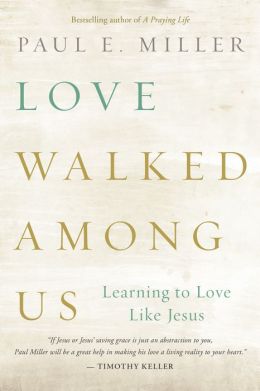
Book Review: Love Walked Among Us

Love Walked Among Us: Learning to Love Like Jesus. Paul E. Miller. 2001/2014. NavPress. 272 pages. [Source: Library]

Want to learn to love like Jesus? Consider reading Paul E. Miller's Love Walked Among Us.

The book is divided into five parts: "Love Shows Compassion," "Love Speaks the Truth," "Love Depends on God," "Love Is Energized By Faith," and "Love Moves Through Death Into Life."

Miller presents the life of Jesus in detail. By studying the life of Jesus, by reading carefully, reflectively, prayerfully, what can we learn about how Jesus loved? But it isn't just a book about what Jesus has done--how Jesus has loved--it's a book challenging readers to love as Jesus loved. It aims to practically teach believers to love like Jesus.

Of course, I appreciated the premise of Love Walked Among Us. And I did enjoy reading it overall. But it almost felt weighed down by personal stories and examples. The focus seemed to be exclusively on learning to love like Jesus loved within specific roles. How learning to love like Jesus can make you a better husband or wife. How learning to love like Jesus can make you a better father or mother. I wish it was less exclusive, that the examples were less so. The principles are solid enough however.

I've also reviewed Paul Miller's A Loving Life.

Favorite quotes:
When we love we cease to be the master and become a servant. (32)
We analyze one another all the time… Analyzing provides the disciples with a safe and tidy world that keeps everything in its place. So they talk about the blind man while they are right in front of him. But Jesus moves toward him, makes mud, and touches his eyes. Jesus lowers himself in order to care, while the disciples elevate themselves in order to judge. The disciples see a blind man; Jesus sees a man who happens to be blind. The disciples see an item for debate; Jesus sees a person, a human being like himself. They see sin, the effect of man's work; Jesus sees need, the potential for God's work. The disciples see a completed tragedy and wonder who the villain was; Jesus sees a story half-told, with the best yet to come. It is one thing to notice a blind man; it is quite another to stop and talk with him--that gets scary. He might ask for money or interrupt our schedule… Compassion affects us. Maybe that's why we judge so quickly--it keeps us from being infected by other people's problems. Passing judgment is just so efficient. (39)
The first step toward God is realizing you are on the wrong path going the wrong way. It's actually quite freeing if you think about it. With your mask off you can get real and relax. When we realize that we don't have it all together, we can care for people because we no longer feel morally superior to them. Consequently, we are quicker to help than to give advice, quicker to listen than to lecture. (55)
Unless you deal with "self"--with human ego--focusing on rules is like rearranging the deck chairs on the Titanic while it is sinking. (59)

© Becky Laney of Operation Actually Read Bible

Tuesday, June 9, 2015

Worth Your Five Minutes

Loved this new video from Desiring God: God Wrote A Book 

 © Becky Laney of Operation Actually Read Bible

My Year with Spurgeon #23

Mercy, Omnipotence, and Justice
Charles Spurgeon
1857
Nahum 1:3
By reason of failures in our character and faults in our life, we are not capable of understanding all the separate beauties, and the united perfection of the character of Christ, or of God, his Father.
Men will misunderstand him, because they are imperfect themselves, and are not capable of admiring the character of God.
Now, this is especially true with regard to certain lights and shadows in the character of God, which he has so marvellously blended in the perfection of his nature: that although we cannot see the exact point of meeting, yet (if we have been at all enlightened by the Spirit) we are struck with wonder at the sacred harmony.
The absence of any one of these things from the character of God would have rendered it imperfect; the presence of them both, though we may not see how they can be congruous with each other, stamps the character of God with a perfection elsewhere unknown.
Let us begin with the first characteristic of God. He is said to be “SLOW TO ANGER.” Let me declare the attribute, and then trace it to its source. 
First, I will prove that he is “slow to anger,” because he never smites without first threatening. Men who are passionate and swift in anger give a word and a blow, sometimes the blow first and the word afterwards.
But again God is also very slow to threaten. Although he will threaten before, he condemns, yet he is slow even in his threatening.
But, best of all, when God threatens, how slow he is to sentence the criminal! When he has told them that he will punish unless they repent, how long a space he gives them, in which to turn unto himself!
Yes, the Lord was slow to anger, slow to write the sentence, even though the command had been broken, and the threatening was therefore of necessity brought into force.
He is slow to anger, again, because he is great. Little things are always swift in anger, great things are not so.
The Lord is slow to anger, and he is slow to anger, because he is great in power.
God is great in power, and therefore doth he keep in his anger. A man who has a strong mind can bear to be insulted, can bear offenses, because he is strong.
We bless God that the greatness of his power is just our protection, he is slow to anger because he is great in power.
The last attribute, and the most terrible one, is, “HE WILL NOT AT ALL ACQUIT THE WICKED.” Let me unfold this, first of all, and then let me, after that, endeavor to trace it also to its source, as I did the first attribute. God “will not acquit the wicked;” how prove I this? I prove it thus. Never once has he pardoned an unpunished sin; not in all the years of the Most High, not in all the days of his right hand, has he once blotted out sin without punishment. What! say you, were not those in heaven pardoned? Are there not many transgressors pardoned, and do they not escape without punishment? Has be not said, “I have blotted out thy transgressions like a cloud, and like a thick cloud thine iniquities?” Yes, true, most true, and yet my assertion is true also — not one of all those sins that have been pardoned were pardoned without punishment.
Sin is still punished, though the sinner is delivered.
And now we trace this terrible attribute to its source. Why is this? We reply, God will not acquit the wicked, because he is good. What! doth goodness demand that sinners shall be punished? It doth.
God is infinitely just, and his justice demands that men should be punished, unless they turn to him with full purpose of heart. Need I pass through all the attributes of God to prove it? Methinks I need not. We must all of us believe that the God who is slow to anger and great in power is also sure not to acquit the wicked.

© Becky Laney of Operation Actually Read Bible

Monday, June 8, 2015

Operation Actually Turns Seven!

Today is my blogoversary! Seven years ago, I started Operation Actually Read Bible because I wanted some accountability, some consistency in my life: I knew I needed to be reading my Bible, and needed to want to read my Bible. Seven years later, I can't imagine not reading my Bible, not wanting to read the Bible. God has blessed these seven years.

The blog turned into a place where I shared updates of my Bible reading, hosted a couple of challenges each year, and shared book reviews of all the Christian books I've read--fiction and nonfiction.

Though it might seem like keeping a record is legalistic, it's not meant to be. Grace is amazing and overflowing. The more I read the Bible--the more overwhelmed by God's grace I become.

Endless Hallelujah by Matt Redman
When I stand before Your throne
Dressed in glory not my own
What a joy I'll sing of on that day
No more tears or broken dreams
Forgotten is the minor key
Everything as it was meant to be
And we will worship, worship
Forever in Your presence we will sing
We will worship, worship You
And endless hallelujah to the King
I will see You as You are
Love You with unsinning heart
And see how much You paid to bring me home
Not till then, Lord, shall I know
Not till then, how much I owe...
© Becky Laney of Operation Actually Read Bible

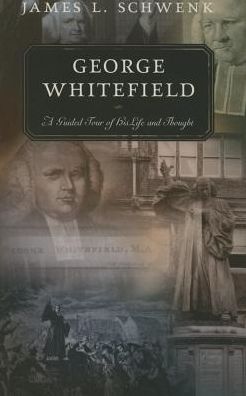
Book Review: George Whitefield

George Whitefield: A Guided Tour of His Life and Thought. James L. Schwenk. 2015. P&R Publishing. 224 pages. [Source: Review copy]

I enjoyed reading James L. Schwenk's George Whitefield: A Guided Tour of His Life and Thought. George Whitefield is someone I enjoy reading about. I find his story compelling, and, I love his passion for evangelism as well. In Schwenk's biography, the focus is on the man and the message.

The first half of the book is purely biographical focusing on the man and his ministry in the UK and the US. The second half of the book are excerpts from Whitefield's writings. Among the excerpts: Whitefield's autobiography, Whitefield's Letter to Wesley December 24, 1740 (the one about predestination), and three sermons, "The Almost Christian," "Britain's Mercies, and Britain's Duties," and "The Good Shepherd."

I love the balance of the two sections. Readers get an opportunity to learn more about George Whitefield, but, they also get the opportunity to read more Whitefield, to get to know him in his own words. In some cases, the material is covered twice. For example, the controversy between George Whitefield and John Wesley is first covered in Schwenk's biography. He extensively discusses the matter. But Whitefield's letter is also included in the second section, so readers get the full story! I must admit that this was the highlight of the book for me!!!

I did enjoy the biographical section. It definitely provided context for reading his work. But I must admit that I enjoyed reading Whitefield's letter to Wesley and his sermon, "Almost Christian" a tiny bit more!

John Wesley's Sermon, "Free Grace"
George Whitefield's Letter to John Wesley 

Quotes from The Almost Christian:
And therefore, from the words of the text [Acts 26:28], shall endeavor to show these three things:
FIRST, What is meant by an almost-Christian.
SECONDLY, What are the chief reasons, why so many are no more than almost Christians.
THIRDLY, I shall consider the ineffectualness, danger, absurdity, and uneasiness which attends those who are but almost Christians; and then conclude with a general exhortation, to set all upon striving not only be almost, but altogether Christians. 
An almost Christian, if we consider him in respect to his duty to God, is one that halts between two opinions; that wavers between Christ and the world; that would reconcile God and Mammon, light and darkness, Christ and Belial. It is true, he has an inclination to religion, but then he is very cautious how he goes too far in it: his false heart is always crying out, Spare thyself, do thyself no harm. He prays indeed, that "God's will may be done on earth, as it is in heaven." But notwithstanding, he is very partial in his obedience, and fondly hopes that God will not be extreme to mark every thing that he willfully does amiss; though an inspired apostle has told him, that "he who offends in one point is guilty of all." But chiefly, he is one that depends much on outward ordinances, and on that account looks upon himself as righteous, and despises others; though at the same time he is as great a stranger to the divine life as any other person whatsoever. In short, he is fond of the form, but never experiences the power of godliness in his heart. 
O let us scorn all base and treacherous treatment of our King and Savior, of our God and Creator. Let us not take some pains all our lives to go to heaven, and yet plunge ourselves into hell as last. Let us give to God our whole hearts, and no longer halt between two opinions: if the world be God, let us serve that; if pleasure be a God, let us serve that; but if the Lord he be God, let us, O let us serve him alone. Alas! why, why should we stand out any longer? Why should we be so in love with slavery, as not wholly to renounce the world, the flesh, and the devil, which, like so many spiritual chains, bind down our souls, and hinder them from flying up to God. Alas! what are we afraid of? Is not God able to reward our entire obedience? If he is, as the almost Christian's lame way of serving him, seems to grant, why then will we not serve him entirely? For the same reason we do so much, why do we not do more? Or do you think that being only half religious will make you happy, but that going farther, will render you miserable and uneasy? Alas! this, my brethren, is delusion all over: for what is it but this half piety, this wavering between God and the world, that makes so many, that are seemingly well disposed, such utter strangers to the comforts of religion? They choose just so much of religion as will disturb them in their lusts, and follow their lusts so far as to deprive themselves of the comforts of religion. Whereas on the contrary, would they sincerely leave all in affection, and give their hearts wholly to God, they would then (and they cannot till then) experience the unspeakable pleasure of having a mind at unity with itself, and enjoy such a peace of God, which even in this life passes all understanding, and which they were entire strangers to before. It is true, it we will devote ourselves entirely to God, we must meet with contempt; but then it is because contempt is necessary to heal our pride. We must renounce some sensual pleasures, but then it is because those unfit us for spiritual ones, which are infinitely better. We must renounce the love of the world; but then it is that we may be filled with the love of God: and when that has once enlarged our hearts, we shall, like Jacob when he served for his beloved Rachel, think nothing too difficult to undergo, no hardships too tedious to endure, because of the love we shall then have for our dear Redeemer. Thus easy, thus delightful will be the ways of God even in this life: but when once we throw off these bodies, and our souls are filled with all the fullness of God, O! what heart can conceive, what tongue can express, with what unspeakable joy and consolation shall we then look back on our past sincere and hearty services. Think you then, my dear hearers, we shall repent we had done too much; or rather think you not, we shall be ashamed that we did no more; and blush we were so backward to give up all to God; when he intended hereafter to give us himself?

© Becky Laney of Operation Actually Read Bible

Sunday, June 7, 2015

Week in Review: May 31-June 6

Let us know; let us press on to know the Lord;
his going out is sure as the dawn;
he will come to us as the showers,
as the spring rains that water the earth. (Hosea 6:3, ESV)
ESV Gospel Transformation

  • Ruth
  • Psalms 42-72
  • Hosea
  • Joel
  • Amos
  • Obadiah
  • Zechariah
  • Malachi
  • John
  • Philippians
  • Colossians
  • 1 Thessalonians
  • 2 Thessalonians

New English Bible

  • Joshua
  • Judges
  • Ruth
  • 1 Samuel 1-14
  • Song of Songs
  • Obadiah
  • Jonah
  • Zechariah
  • Malachi
  • Mark
  • John
  • Romans
  • Philemon

KJV

  • John
  • 1 John 
  • 2 John
  • 3 John
  • Jude
  • Revelation

GNT

  • John

HCSB

  • Matthew

RSV

  • John

NIV

  • John


© Becky Laney of Operation Actually Read Bible