Monday, January 12, 2015

Book Review: Don't Give Up, Don't Give In

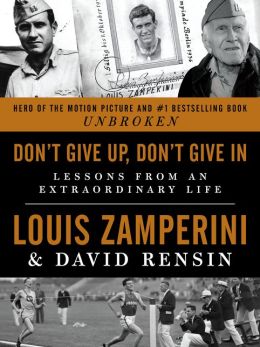
Don't Give Up, Don't Give In. Lessons From An Extraordinary Life. Louis Zamperini and David Rensin. 2014. 272 pages. [Source: Library]

If you've read Unbroken, then chances are you're going to want to read Don't Give Up, Don't Give In too. Readers learn more: more about his childhood, more about his training and running, more about the war years--his service, his time adrift, his imprisonment, his survival--more about what happened after the war--before and after his conversion. It brings readers up to date, completes his life story. (In fact, the manuscript was finished just days before Louis Zamperini's death.) And it has a more personal, more intimate feel. I would definitely recommend it.

Don't Give Up, Don't Give In is more than an autobiography. It is packed with advice for readers of all ages.

Run for Your Life

  • The Family Rules
  • Anyone Can Turn Their Life Around
  • The Difference Between Attention and Recognition is Self-Esteem
  • It's Not How You Win, It's How You Lose
  • A Race Isn't Over Until It's Over

Be Prepared

  • Preparation Determines Your Survival
  • My Survival Kit
  • Trust What You Know
  • Keep Your Mind Sharp
  • Don't Forget to Laugh

Don't Give Up, Don't Give In

  • You Are the Content of Your Character
  • Never Let Anyone Destroy Your Dignity
  • Hate Is a Personal Decision
  • The True Definition of a Hero

Attitude is Everything

  • You Must Have Hope
  • Don't Ask Why, Ask What's Next
  • You Choose How To View Your Fate
  • The Secret of Contentment

After the War: Still Lost

  • You Can't Run (Or Sail) Away From Yourself
  • Don't Leave the Crucial Details to Others

There's Always An Answer To Everything

  • You Need a Cloud to Have A Silver Lining
  • Know When You've Done All You Can Do
  • The Gangster and the Gospel


Give Back

  • It Takes a Camp To Help A Child
  • Get Their Attention
  • First You Listen
  • Accomplishment Is the Key to Self-Respect
  • My Private Reward
  • The Mission That Never Ends


What I've Learned

  • Challenge Yourself
  • Learn to Adapt
  • Commitment and Perseverance Pay Off
  • You're Only As Old As You Feel
  • Free Advice

Lessons of the Olympic Spirit

  • It's About People
  • You Have To Carry A Torch
  • Forgiveness is the Healing Factor


Remember Me This Way

  • A Charitable Heart


© Becky Laney of Operation Actually Read Bible

Sunday, January 11, 2015

Book Review: Autopsy of a Deceased Church

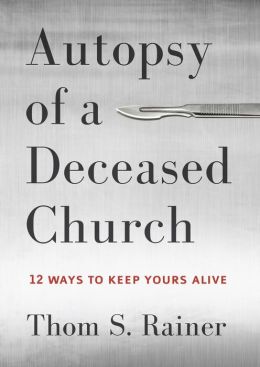
Autopsy of a Deceased Church: 12 Ways to Keep Yours Alive. Thom S. Rainer. 2014. B&H. 112 pages. [Source: Review copy]

In Autopsy of a Deceased Church, Thom Rainer discusses the factors that often lead to a church dying. The "autopsy" of sorts is on fourteen churches. His conclusions--his generalizations--are based on fourteen specific churches. For the purposes of this book, he's assuming that the dying churches are not dying for theological or doctrinal issues. He doesn't go there in this book for better or worse.

The first eleven chapters focus on dying churches, on the factors that led to their death, to the closing of their doors. Reading the chapter titles do a good job of giving you a preview. To name just a few:

  • The Past is the Hero
  • The Church Refused to Look Like the Community
  • The Budget Moved Inwardly
  • The Great Commission Becomes the Great Omission
  • The Preference-Driven Church
  • The Church Rarely Prayed Together

The final three chapters focus on "12 Ways to Keep Yours Alive." Most churches would fall into one of three categories--in the author's opinion: sick (showing some (early) symptoms of sickness), very sick (have gradually and progressively moved from symptoms of sickness to SEVERE deterioration over several years/decades), and dying. (Technically, this is how he views things: 10% of churches are healthy, 10% of churches are dying, 40% are showing symptoms of sickness, and 40% are very sick. So 90% of churches would "need" to read this book for advice, I suppose!) There is a chapter for sick churches, a chapter for very sick churches, and a chapter for dying churches. Each chapter concludes with 4 pieces of advice.

His advice for very sick churches:

  • The church must admit and confess its dire need.
  • The church must pray for wisdom and strength to do whatever is necessary.
  • The church must be willing to change radically.
  • That change must lead to action and an outward focus.

Autopsy of A Deceased Church is a short, practical book. The chapters are reader-friendly. The topic is serious, of course, but the writing style is relaxed and straight forward. Each chapter ends with a prayer and questions for further thought. I think the book is so reader-friendly that even non-readers (those who don't willingly pick up books) interested in the topic will find it of value.

Does it cover everything? Is it exhaustive on the subject? No. Of course not. For one thing, it excludes unhealthy churches with doctrinal issues. A practical book on how to help a divided church where half the members are conservative and half the members are liberal--doctrinally speaking--would be welcome! The book also fails to dwell on gossip, slander, and fighting. A practical book on how to help a church with toxic members would also be welcome. (Though if such a book existed, I fear, it would be read by people who point fingers. SO-AND-SO needs to read this book. I'll read this book with SO-AND-SO in mind. It describes SO-AND-SO so very well!!! It's like the author has sat by him/her during service. I fear even if it was subtitled: Yes, this book is for YOU, it would be misread.) So don't expect the book to cover every single situation and problem.

The book has plenty of substance. But. I will say that most of it is commonsense. It's not exactly "new" information or "new" advice. It's good advice nevertheless.

© Becky Laney of Operation Actually Read Bible
Week in Review: January 4-10


“God is not a man, that He should lie,
Nor a son of man, that He should repent;
Has He said, and will He not do it?
Or has He spoken, and will He not make it good? (Numbers 23:19) (NASB)
NASB (text-only)

  • Exodus
  • Leviticus
  • Numbers
  • Deuteronomy
  • Joshua 1-2
KJV -- Dramatized Audio

  • Psalm 42-72

NIV-UK (audio)

  • 1 Chronicles
  • 2 Chronicles

J.B. Phillips (text-only)

  • Matthew
  • Mark 1-3

© Becky Laney of Operation Actually Read Bible

Saturday, January 10, 2015

Book Review: Meeting God in Mark

Meeting God in Mark. Rowan Williams. 2015. Westminster John Knox. 108 pages. [Source: Review copy]

Looking for a book to read during Lent this year? You might consider reading Rowan Williams' Meeting God in Mark. In his book, he urges readers to read Mark slowly and thoughtfully, to resist the urge to rush through it. Yes, Mark has a compressed feel to it, a fast-pace, if you will. But it is a substantive book with much to say theologically.

Meeting God in Mark is a quick read. The book includes a schedule for daily/weekly reading in Mark for Lent. The schedule has six days a week for reading the gospel of Mark, and one day a week for reading the reflection in the book. There are also discussion questions for each chapter in Meeting God in Mark.

The book is what it is. The book spends much time--perhaps wastes much time--in introducing the basics of the gospel of Mark. In an effort to be fair to all scholarship, it over-presents and doesn't quite conclude anything. If you accept the Bible for what it is--the very Word of God--and if you accept what the Bible has to say about itself, and what tradition has to say about the Bible, then much of the book is a waste of time. In other words, it is all: who wrote the gospel of Mark? was it written by one person or more than one person? was it a collection of folklore or stories? is it the work of a community, expressing more about the community's needs and interests and wants, or is it factual? are the contents factual and historical? what century was it written in? where was it written? why was it written? should smart readers question all the miracles in Mark? Who was this "Mark"? And should readers believe there was a person named Mark who actually wrote the book? Did this "Mark" actually work closely with Peter? A good study Bible can do a good job of establishing everything readers need to know. Emphasis on GOOD study Bible. The author presents multiple sides of the scholarly debate without really clearly concluding anything at all.

But the book goes beyond that, and that's a good thing. The book examines the theological messages and themes of Mark paying attention to the miracles, the parables, and passion week. It focuses on the unexpectedness of the "good news" message of Mark, focusing on how in Mark God is revealed as a God who doesn't rescue from the sky but endures pain and suffering and ridicule.

Meeting God in Mark is ALL about God in relationship. Mark, he argues, is about revealing God in relationship: showing story by story, verse by verse, Jesus in relationship with many, many people. How the gospel focuses on people's reactions to Jesus, if they take the relationship further, deeper coming to TRUST and FAITH, or if they reject him. How the gospel can be read as offering readers the same invitation of relationship or fellowship.

I liked some of what I read. I definitely found it thought-provoking in places. I didn't like everything I read, however.

Friday, January 9, 2015

Focus on Revelation 21:3-4

Two of my January memory-verses come from Revelation 21. Though I've chosen to memorize them in the ESV, I thought it would be interesting to see how other versions of the Bible translate these verses. After all, almost more important than memorization is meditation and understanding. And reading in various translations can help with that!

ESV
And I heard a loud voice from the throne saying, “Behold, the dwelling place of God is with man. He will dwell with them, and they will be his people, and God himself will be with them as their God. He will wipe away every tear from their eyes, and death shall be no more, neither shall there be mourning, nor crying, nor pain anymore, for the former things have passed away.”
HCSB
Then I heard a loud voice from the throne:
Look! God’s dwelling is with humanity,
and He will live with them.
They will be His people,
and God Himself will be with them
and be their God.
He will wipe away every tear from their eyes.
Death will no longer exist;
grief, crying, and pain will exist no longer,
because the previous things have passed away.
NASB
And I heard a loud voice from the throne, saying, “Behold, the tabernacle of God is among men, and He will dwell among them, and they shall be His people, and God Himself will be among them, and He will wipe away every tear from their eyes; and there will no longer be any death; there will no longer be any mourning, or crying, or pain; the first things have passed away.”

NIV
And I heard a loud voice from the throne saying, “Look! God’s dwelling place is now among the people, and he will dwell with them. They will be his people, and God himself will be with them and be their God. ‘He will wipe every tear from their eyes. There will be no more death’ or mourning or crying or pain, for the old order of things has passed away.”
MEV
And I heard a loud voice from heaven, saying, “Look! The tabernacle of God is with men, and He will dwell with them. They shall be His people, and God Himself will be with them and be their God. ‘God shall wipe away all tears from their eyes. There shall be no more death.’ Neither shall there be any more sorrow nor crying nor pain, for the former things have passed away.”
The Living Bible
I heard a loud shout from the throne saying, “Look, the home of God is now among men, and he will live with them and they will be his people; yes, God himself will be among them. He will wipe away all tears from their eyes, and there shall be no more death, nor sorrow, nor crying, nor pain. All of that has gone forever.”
NLT
I heard a loud shout from the throne, saying, “Look, God’s home is now among his people! He will live with them, and they will be his people. God himself will be with them.  He will wipe every tear from their eyes, and there will be no more death or sorrow or crying or pain. All these things are gone forever.”
NKJV
And I heard a loud voice from heaven saying, “Behold, the tabernacle of God is with men, and He will dwell with them, and they shall be His people. God Himself will be with them and be their God. And God will wipe away every tear from their eyes; there shall be no more death, nor sorrow, nor crying. There shall be no more pain, for the former things have passed away.”
J.B. Phillips
Then I heard a great voice from the throne crying, “See! The home of God is with men, and he will live among them. They shall be his people, and God himself shall be with them, and will wipe away every tear from their eyes. Death shall be no more, and never again shall there be sorrow or crying or pain. For all those former things are past and gone.”
KJV
And I heard a great voice out of heaven saying, Behold, the tabernacle of God is with men, and he will dwell with them, and they shall be his people, and God himself shall be with them, and be their God.
And God shall wipe away all tears from their eyes; and there shall be no more death, neither sorrow, nor crying, neither shall there be any more pain: for the former things are passed away.
Complete Jewish Bible
I heard a loud voice from the throne say, “See! God’s Sh’khinah is with mankind, and he will live with them. They will be his people, and he himself, God-with-them, will be their God. He will wipe away every tear from their eyes. There will no longer be any death; and there will no longer be any mourning, crying or pain; because the old order has passed away.”

Still curious: The Message (it makes me shudder), CEB, AMP, LEB.


© Becky Laney of Operation Actually Read Bible

Thursday, January 8, 2015

Quotes from the Clouds #1

This year, I hope share weekly posts of quotes. These quotes are from authors I'm reading and enjoying from the Clouds of Witnesses Reading Challenge

For fellow participants, what I would LOVE, LOVE, LOVE to see is for people to share quotes from what they're reading. I'd love for you to share quotes occasionally with your readers and let me know about it. If you don't have a blog, you could always leave quotes in the comments here.

This week, I'm quoting Martin Luther and Charles Spurgeon.
There are two ways to believe. The first way is to believe about God, meaning we believe that what is taught about God is really true. It’s similar to believing that what is taught about the devil or hell is true. This type of belief is more a statement of knowledge than an expression of faith. The second way is to believe in God. This not only includes believing that what is taught about God is true, but also includes trusting him and daring to be in relationship with him. It means believing without any doubt that he really is who he says he is, and he will do all he says he will do. I wouldn’t believe any person to this same degree, no matter how highly others might praise him. It’s easy to believe that someone is godly, but it’s another matter to rely completely on him. Those who believe in God believe everything written about God in Scripture. They dare to believe this in life and in death. This faith makes them true Christians and gives them everything they desire from God. A person with an evil, hypocritical heart can’t have this type of faith, for it’s a living faith, as described in the first commandment: “I am the LORD your God. . . . You shall have no other gods” (Exodus 20:2–3). Therefore, the little word in is well placed and should be carefully noted. We don’t say, “I believe God the Father,” or “I believe about God the Father,” but “I believe in God the Father, in Jesus Christ, in the Holy Spirit.” Only God can give us this type of faith. ~ Martin Luther, Faith Alone, January 3
Prayer must not be based on or depend on your personal worthiness or the quality of the prayer itself; rather, it must be based on the unchanging truth of God’s promise. If the prayer is based on itself or on anything else besides God’s promise, then it’s a false prayer that deceives you—even if your heart is breaking with intense devotion and you are weeping drops of blood. We pray because we are unworthy to pray. Our prayers are heard precisely because we believe that we are unworthy. We become worthy to pray when we risk everything on God’s faithfulness alone. So go ahead and feel unworthy. But know in your heart that it’s a thousand times more important to honor God’s truthfulness. Yes, everything depends on this alone. Don’t turn his faithful promise into a lie by your doubts. For your worthiness doesn’t help you, and neither does your unworthiness hinder you. A lack of faith is what condemns you, but confidence in God is what makes you worthy. ~ Martin Luther, Faith Alone, January 5
Since, O sweet Lord Jesus, thou art the present portion of thy people, favour us this year with such a sense of thy preciousness, that from its first to its last day we may be glad and rejoice in thee. Let January open with joy in the Lord, and December close with gladness in Jesus. ~ Charles Spurgeon, Evening, January 1
It is interesting to remark how large a portion of Sacred Writ is occupied with the subject of prayer, either in furnishing examples, enforcing precepts, or pronouncing promises…We have multitudes of commands, and myriads of promises. What does this teach us, but the sacred importance and necessity of prayer? We may be certain that whatever God has made prominent in his Word, he intended to be conspicuous in our lives. If he has said much about prayer, it is because he knows we have much need of it. So deep are our necessities, that until we are in heaven we must not cease to pray. Dost thou want nothing? Then, I fear thou dost not know thy poverty. Hast thou no mercy to ask of God? Then, may the Lord's mercy show thee thy misery! A prayerless soul is a Christless soul. Prayer is the lisping of the believing infant, the shout of the fighting believer, the requiem of the dying saint falling asleep in Jesus. It is the breath, the watchword, the comfort, the strength, the honour of a Christian. If thou be a child of God, thou wilt seek thy Father's face, and live in thy Father's love. Pray that this year thou mayst be holy, humble, zealous, and patient; have closer communion with Christ, and enter oftener into the banqueting-house of his love. Pray that thou mayst be an example and a blessing unto others, and that thou mayst live more to the glory of thy Master. The motto for this year must be, "Continue in prayer." ~ Charles Spurgeon, January 2

Wednesday, January 7, 2015

Book Review: Like A Flower in Bloom

Like a Flower in Bloom. Siri Mitchell. 2015. Bethany House. 384 pages. [Source: Review copy]

I expected to enjoy Like A Flower in Bloom. After all, I've enjoyed several of Siri Mitchell's romance novels in the past. (I've read Love Comes Calling, A Heart Most Worthy, She Walks in Beauty, Love's Pursuit, and A Constant Heart.) But as much as I've enjoyed her work, I didn't expect to LOVE, LOVE, LOVE her newest book Like A Flower in Bloom.

Charlotte Withersby is a botanist, a scientist. She not only loves collecting flowers and plants and the like, but she loves classifying, writing, researching, and illustrating. She comes by it naturally, in a way. There are botanists on both sides of her family for at least a generation or two. Her father is recognized in the field. What few now is that Charlotte herself does much of the work: she writes, she illustrates, and it is published under her father's name. She's tried submitting articles under her own name, but, with no luck. Submitting the same articles under her father's name, no problem whatsoever with getting published. Charlotte's interest is not a hobby, it's so much more than that. It's her life work, she feels. If only she could have a career as a botanist. If only she could gain the respect and recognition.

Her uncle and her father team up to "ruin" Charlotte's life early in the novel. The time has come, they say, for her to stop busying herself with flower collections and get down to the business of finding a husband and settling down. Her uncle is willing to "launch" her into society, and to pay for her to have a new wardrobe. But Charlotte, for one, does not want to be launched. She is quite content, thank you very much, to stay put. Why can't she continue on helping her father? Why can't she keep on paying her father's bills, writing her father's books, writing her father's correspondence, etc.? Her struggle continues over the next few days when "her father's correspondent" Mr. Edward Trimble arrives. This is where I squirmed a little bit when reading. For her father has absolutely NO tact and tells the stranger of his intent to marry off his daughter. He speaks of sending her off husband-catching. Mr. Withersby sees Mr. Trimble's arrival just then as being a perfect solution. He urges Mr. Trimble to become his assistant--starting immediately--so that his daughter can go out and about and catch herself a husband! Charlotte is embarrassed and frustrated. Her father may not know Mr. Trimble well, but, she does. For she's been corresponding with him for years. It seems Charlotte is to have no say in the matter, she'll be "launched" willing or not into a strange, confusing world of proper society.

Charlotte is lucky. For she meets a young lady who becomes her best, best friend. Together they may make it through this difficult time. Both women are honest with each other. Together they get in and out of trouble. The book is fun and amusing and just charming.

What I loved most about Like A Flower in Bloom is the characterization. All of the characters--not just the 'main' characters, but the 'minor' ones as well are well fleshed out. Readers get a chance to really know three eligible bachelors.

Even if you don't "like" Christian fiction, I think you should give Like A Flower in Bloom a try if you love classics, and/or if you love Victorian literature.


© Becky Laney of Operation Actually Read Bible